
From the dawn of creation, the family tree of Adam and Eve branches out like an epic saga. The Genesis genealogy isn’t just a list of names—it’s a living testament to God’s grand design. As we trace the Adam and Eve family tree, we uncover a lineage that shaped history and pointed toward a divine promise.
Through this journey, we see how ordinary people became extraordinary instruments in God’s plan. Every name tells a story of faith, struggle, and purpose. Let’s explore this ancient family tree and discover the hidden threads that weave us all into God’s greater narrative.
Descendants of Adam and Eve
What is the family tree of Adam and Eve? To put it simply, it’s the beginning of human history. The Bible tells us about the first humans’ immediate family and early descendants, which formed the foundation of the human family tree.
How Many Children Did Adam and Eve Have?
The Bible specifically names three sons—Cain, Abel, and Seth—but also mentions additional offspring: “After Seth was born, Adam lived 800 years and had other sons and daughters” (Genesis 5:4).
Given Adam’s 930-year lifespan (Genesis 5:5), it’s very likely they had many more children.
Who Were Adam and Eve’s Children?
Genesis introduces Adam and Eve’s three sons: Cain and Abel (Genesis 4:1–2), and later Seth (Genesis 4:25), after Abel’s death. These sons played key roles in the early history of humanity.
Cain, the firstborn, became a farmer. Abel, the second son, was a shepherd. After Abel’s death, Seth was born and continued the godly line. As we mentioned earlier, Genesis 5:4 also tells us that Adam and Eve had other sons and daughters, though we don’t know their names.
Each of their children played a role in shaping early humanity, setting the stage for civilizations to grow and for God’s plan to unfold. Though Scripture only names three of their sons, their descendants would go on to fill the earth, carrying with them the weight of both sin and redemption. From the first family came the generations that would lead to Noah, Abraham, and ultimately, Jesus—showing that even in the earliest days, God was already writing a much bigger story.
Did Adam and Eve’s Children Marry Each Other?
Yes, Adam and Eve’s children likely married each other. Early biblical marriages differed from later norms. For example, Abraham married his half-sister, Sarah (Genesis 20:12). God initially allowed close family marriages but later introduced rules in Leviticus prohibiting such unions.
At the beginning of the human race, people’s genetics were much closer to how God originally made them—unblemished and pure. So, despite intermarriage among close relatives, their genes had not experienced harmful mutations, and the risks we know about today from marrying close relatives didn’t exist in the same way.
Later, as the human population grew and the effects of sin and genetic mutations accumulated, God gave laws that prohibited marrying close relatives. This change protected human health as the population grew, demonstrating God’s ongoing guidance and care for humanity.
While marrying a close relative like a brother or sister is considered wrong and harmful today—because of genetic problems that can come from it—things were different back then.

Are All Humans Descendants of Adam and Eve?
Yes, all humans are descendants from the Adam and Eve family tree. This helps us understand our need for Jesus. In Acts 17:26, Paul says, “From one man God made all nations,” showing we’re one big family, which means:
- We all share in “original sin” from Adam and Eve’s disobedience.
- We all carry God’s image, making us valuable.
- We’re all equal in God’s eyes.
Paul’s words remind us that God created and cares for everyone. Our shared origin should inspire kindness. It’s why Jesus came to bring good news for all people, teaching us to love everyone as God does.
Can Your Genes Be Mapped Back to Adam and Eve?
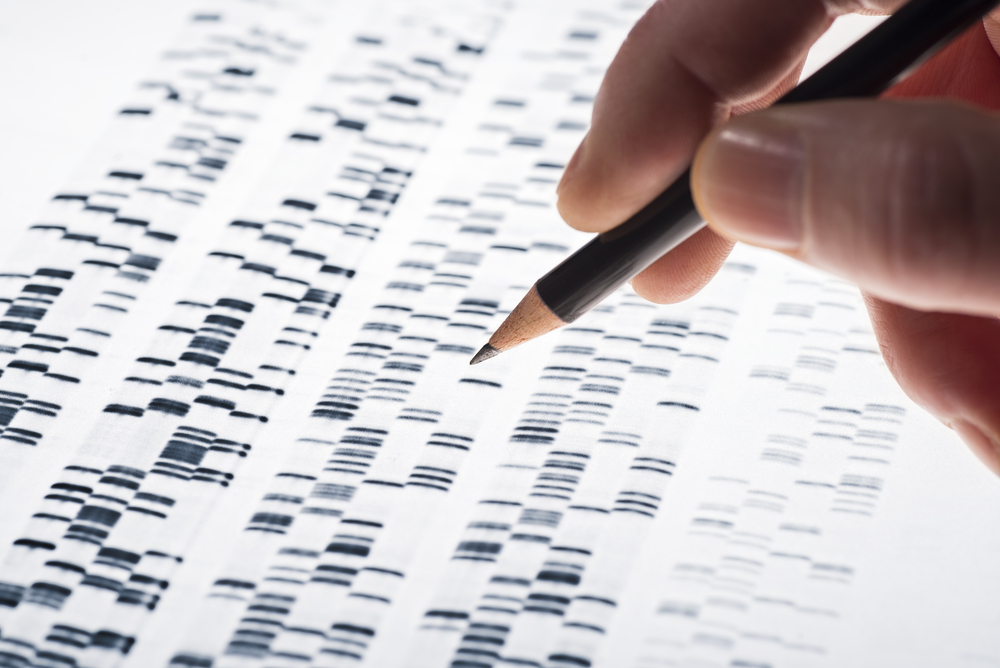
Scientists study human DNA to learn about our earliest ancestors. Through genetic research, they’ve found that all people can be traced back to a “mitochondrial Eve” (through maternal DNA) and a “Y-chromosomal Adam” (through paternal DNA).
These discoveries align remarkably well with the Bible’s account of human origins. However, some researchers interpret the genetic evidence differently. Rather than considering the possibility of an original pair, they propose that the first humans were part of a much larger population, and only the Adam and Eve lineage survived. Some models estimate that thousands of people existed at the dawn of human history.
But these models are built on hypotheses that may not tell the whole story. Genetic diversity could have increased rapidly after Adam and Eve through natural selection, or they may have been created with a broader range of genetic variation, allowing for diversity from the very beginning.
While DNA studies don’t offer a conclusive answer, they also don’t disprove the biblical account. Instead, they open the door for continued exploration. As scientists and theologians seek to understand human origins, the conversation between faith and science remains both fascinating and ongoing.
Genesis Family Tree
The Bible tells us about the family trees that came from Adam and Eve. These family lines help us see how God’s plan unfolded through the generations. In the Genesis genealogies, we find two main family lines: Cain’s line and Seth’s line.
Cain’s Family Tree
Genesis 4:17–22 traces Cain’s family tree from his son Enoch through Irad, Mehujael, and Methushael to Lamech. Lamech had two wives, Adah and Zillah, and four children: Jabal, Jubal, Tubal-Cain, and Naamah.
Cain’s wife came from Adam and Eve, who had other children (Genesis 5:4). The family’s innovations in agriculture, music, and metallurgy fulfilled God’s command to “fill the earth and subdue it” (Genesis 1:28), although Cain’s line was separated from God. As Hugh Ross notes in Navigating Genesis (pp. 117–122), Cain’s descendants advanced early human civilization.
Genealogy of Seth to Noah
Seth’s family line is significant because it leads to Noah. We find this family tree in Genesis 5. Here are some key people:
- Seth: Adam and Eve’s son, born after Abel (Genesis 4:25)
- Enoch: a man who “walked faithfully with God” (Genesis 5:24)
- Methuselah: lived the longest of anyone in the Bible—969 years! (Genesis 5:27)
- Noah: the man God chose to build the ark (Genesis 5:29)
Genealogy of Noah
Genesis 10 describes how, after the flood, Noah’s three sons—Shem, Ham, and Japheth—had many children. Noah’s sons and their families continued Adam’s lineage, and from them came the rest of the human race.
Genesis Genealogy Chart
The Bible details the Genesis genealogy, including how long people lived. This chart shows some of the key figures in Adam’s family line:
| Name | Father | Age at Son’s Birth | Lifespan | Biblical Reference |
|---|---|---|---|---|
| Adam | Created by God | 130 (Seth) | 930 | Genesis 5:3–5 |
| Seth | Adam | 105 (Enosh) | 912 | Genesis 5:6–8 |
| Enosh | Seth | 90 (Kenan) | 905 | Genesis 5:9–11 |
| Kenan | Enosh | 70 (Mahalalel) | 910 | Genesis 5:12–14 |
| Mahalalel | Kenan | 65 (Jared) | 895 | Genesis 5:15–17 |
| Jared | Mahalalel | 162 (Enoch) | 962 | Genesis 5:18–20 |
| Enoch | Jared | 65 (Methuselah) | 365 | Genesis 5:21–24 |
| Methuselah | Enoch | 187 (Lamech) | 969 | Genesis 5:25–27 |
| Lamech | Methuselah | 182 (Noah) | 777 | Genesis 5:28–31 |
| Noah | Lamech | 500 (Shem, Ham, Japheth) | 950 | Genesis 5:32, 9:29 |
Biblical Family Tree from Adam to Jesus
The Adam and Eve family tree to Jesus forms an important part of biblical history. In the New Testament God continues to reveal his unfolding plan over many generations. The Bible presents two main versions of this family tree:
Matthew’s Gospel begins with Abraham, progressing to Jesus in three 14-generation segments, highlighting key periods in Israel’s history. It includes notable figures like David and Solomon, ending with Joseph, Jesus’s earthly father.
Luke’s Gospel reverses the approach, tracing from Jesus back to Adam across 77 generations. This version connects Jesus to all humanity—not just Jewish lineage—and concludes with Adam as “the son of God.”
Both genealogies contain intentional gaps, omitting certain names to emphasize specific points about Jesus’s family. Matthew portrays Jesus as the promised Jewish king, while Luke presents him as the universal Savior.
Are There Gaps in the Family Tree?
When we examine Jesus’s genealogy in the Bible, we notice some deliberate omissions. In Matthew’s account, certain generations are left out. Matthew 1:8–9 jumps from Joram to Uzziah, omitting several generations mentioned in the Old Testament (1 Chronicles 3:11–12).
A significant gap exists between Salmon and Boaz. Ruth 4:21–22 lists them as father and son, yet historically, there’s a 400-year gap between them.
Early Christian scholars recognized these differences. They proposed that Matthew and Luke had different purposes: Matthew emphasizes Jesus’s royal lineage, while Luke (3:23–38) highlights Jesus’s connection to all humanity.
These gaps don’t invalidate the genealogies. Rather, they show that God’s plan extends beyond a simple list of names.
Jewish and Arabic origins
Jesus’s genealogy unites diverse groups. His Jewish lineage includes key figures like Abraham (Matthew 1:1–2) and King David (Matthew 1:6).
Islamic tradition acknowledges this heritage, tracing its roots to Ishmael, Abraham’s other son (Genesis 25:12–18). Though not in Jesus’s direct line, Ishmael is considered a relative of the Jewish people.
Abraham’s shared ancestry highlights the common origins of Judaism, Christianity, and Islam. As God promised in Genesis 12:3: “All peoples on earth will be blessed through you.”
Jesus, the Second and Final “Adam”
Jesus’s genealogy connects him to Adam, the first man. The New Testament refers to Jesus as the “second Adam” (1 Corinthians 15:45). Romans 5:12–21 elaborates on how sin entered through Adam, and redemption through Christ. As the second Adam, Jesus Christ fulfilled all righteousness, which the first Adam failed to do, and represents humanity’s new beginning through his atonement.
This theological model emphasizes:
- Restoration:
Jesus restores humanity’s relationship with God (2 Corinthians 5:18–19). - Fulfillment of Prophecy:
His lineage fulfills Messianic prophecies (Isaiah 11:1–2, Jeremiah 23:5–6).
Jesus’s genealogy illustrates God’s redemptive plan, from Adam (Genesis 3:15) to Christ (Galatians 4:4–5).

Embracing Our Roots from Eden to Eternity
Adam and Eve’s lineage reveals God’s enduring plan of connecting all believers to a grand narrative that began at creation. From the first pages of the Old Testament, the one true God is at work to restore all things to his good design.
Through human failures and triumphs, this family tree showcases God’s unwavering faithfulness. By exploring these biblical genealogies, we gain perspective on our place in God’s story and our shared spiritual heritage as his children.