
For the past century, people have asked a big question: is there a conflict between science and the Christian faith? Can science and Christianity really fit together?
Some say these two are in constant battle—each pulling in opposite directions.
Others believe they walk hand in hand, offering unique insights into life, the universe, and our purpose within it.
The relationship between science and Christianity often feels like a puzzle. On one side, science dives deep into how the world works through experiments and evidence. On the other side, Christianity (and religion in general) seeks to answer the big questions about why we’re here and what it all means.
But here’s the thing . . .
. . . we believe these two don’t have to be at odds. They can actually complement each other instead.
Whether you’ve wrestled with the tension or are just curious, we’re excited to explore this with you. Let’s unpack the connection between science and religion and see if these worlds are really as divided as they sometimes seem.
Is There a Conflict Between Science and Christianity?
At Reasons to Believe, we don’t see a true conflict between science and Christianity. Instead, we believe any apparent tension reflects misunderstandings or misinterpretations—not an inherent clash.

Relationship Between Science and Christianity
A Shared History of Discovery
When we think about the relationship between science and Christianity, perhaps it’s easy to assume they’ve always been at odds.
But history tells a different story.
Many of the greatest scientific advancements were born out of Christian thought and values.
During the Scientific Revolution—a period that shaped much of modern science—many pioneers of discovery were deeply committed Christians.
- Isaac Newton, often called one of the greatest minds in science, saw studying the natural world as a way to glorify God.
- Johannes Kepler, who uncovered the laws of planetary motion, famously described his work as “thinking God’s thoughts after him.”
- And let’s not forget Gregor Mendel, the father of modern genetics, who was a monk studying pea plants in his monastery garden.
These figures are only a small fraction of influential thinkers who didn’t see a conflict between their faith and their scientific pursuits; rather, they viewed them as interconnected paths to understanding truth.
A Deeper Connection Between Science and Christianity
This connection isn’t just historical, either. If we take a closer look, Christianity played a critical role in the development of science itself. The belief in an orderly, rational Creator inspired early scientists to search for patterns and laws in the natural world. They assumed that if the universe was designed by God, it would make sense.
And remarkably, it does!
Science and Christianity share a foundational belief built on order and purpose—concepts essential for scientific exploration.
It’s clear the two are not strangers to each other. While they may ask different questions, they often meet in fascinating ways.
Science thrives on exploring the how—how things happen, how the world God created works.
On the other hand, Christianity focuses on the why—why we exist, why the universe matters.
Together, these perspectives can provide a fuller view of the world and our place within it.
This is why we believe the relationship between science and Christianity can’t be thought of as completely separate. They’ve influenced each other for centuries and continue to do so. Far from being opposing forces, they can work together to uncover deeper truths about creation and the Creator.
Christian Faith vs. Scientific Research
The key to understanding this relationship between the Christian faith and scientific research lies in how we view science and theology. Both are ways God reveals himself to us. Through the Bible, God communicates specific truths—what we call special revelation. Through nature, God reveals himself in a broader, more general way—often referred to as general revelation
As Christians, we believe both of these are authored by God and, therefore, cannot truly contradict each other.
Here’s the catch, though: we humans are fallible.
Our interpretations of Scripture and our interpretations of nature are imperfect. When a conflict arises—like a disagreement over the age of the Earth or the origin of the universe—it’s a signpost that we may have misunderstood one or both revelations.
It’s not Scripture or nature that’s wrong; it’s how we’ve interpreted them.
For example, early Christians like Augustine warned that we need to approach Scripture carefully when addressing scientific claims, recognizing the cultural context and literary style. Similarly, science often revises old interpretations to account for new data. This back-and-forth pursuit of truth and a growing body of knowledge is what allows us to grow in both faith and understanding.
When Christian theology and science seem to be at odds, we must take the time to dig deeper, as well as give room for uncertainties. Instead of choosing between the two, we can investigate both with patience and humility.
After all, the God who inspired the Bible is the same Creator who designed the universe. Apparent conflicts can often be resolved not by rejecting either but by refining our perspective.
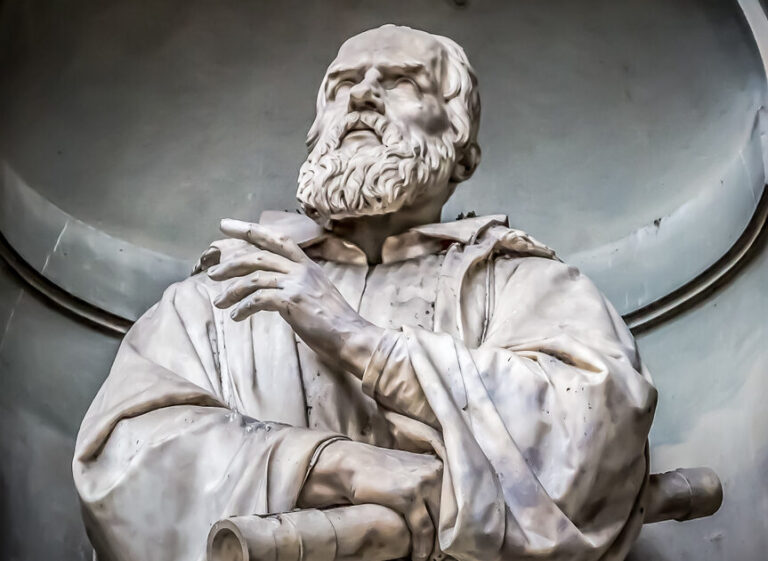
The Galileo Affair
One of the most well-known examples of the supposed science and faith conflict is the Galileo affair. Galileo Galilei, a renowned scientist of the seventeenth century, supported the idea that the Earth orbits the Sun—a theory originally proposed by Copernicus.

At the time, the church held the geocentric view that the Earth was the center of the universe. Galileo’s findings seemed to contradict Scripture as it was interpreted then, leading to his trial and condemnation by the Roman Catholic Church.
However, many historians now view the Galileo affair more as a clash of egos, politics, and miscommunication rather than a fundamental opposition to Christian beliefs in science. The church leaders of Galileo’s time were grappling over who got to interpret Scripture and with how to interpret Scripture in light of new scientific discoveries. Catholics and Protestants still disagree over who gets to interpret Scripture, but both have developed powerful tools and new perspectives that they use today.
Over time, the church acknowledged its mistake, and Galileo is now celebrated—not as a figure against faith, but as someone who helped pave the way for a deeper understanding of God’s creation.
Modern Science Conflicts
The push and pull between science and religion hasn’t disappeared. Modern science debates often center around issues like climate change, bioethics, or the origins of the universe.
Take, for example, the question of the big bang. While some see this theory as a challenge to Christian beliefs, many others, including scientists who are Christian, view it as complementary. The big bang strongly points to a beginning for the universe—a concept that aligns with the biblical notion of creation.
Similarly, advances in genetics and medicine sometimes raise ethical questions that seem to put science and faith at odds. Issues like gene editing or end-of-life care can feel like uncharted territory. But through open conversation, many Christians can engage with these advancements thoughtfully, weighing the moral principles of their faith alongside the benefits of scientific progress.
Building Bridges
Dialogue is key to resolving conflicts and fostering understanding. By talking openly and listening to one another, Christians are finding ways to reconcile faith with scientific discovery.
Ultimately, such conversations remind us that both religion and science seek truth—they just approach it in different yet complementary ways. Conflict often comes when we limit ourselves to either-or thinking, but harmony emerges when we embrace both-and perspectives, recognizing that God speaks through both Scripture and his creation.
Is There Conflict Between Science and Faith?
At first glance, science and faith might look like they’re standing on opposite sides of a dividing line. Often the perceived opposition flows from the reality that science and the Christian faith both pursue truth but have a different focus. Science usually asks “how” where faith usually asks “why”.
These different focuses can sometimes feel like a conflict between science and Christianity, but really, they offer individual perspectives that complement each other.
Faith provides a foundation for meaning and purpose that science alone can’t supply. Science helps us understand the mechanics of life, but it doesn’t answer the deeper, heart-level questions that faith does.
Take something as simple as a sunset; it’s breathtakingly beautiful. Science can explain the scattering of light through the atmosphere, but it’s faith that moves us to see it as beautiful and as a gift from God.
Similarly, faith can inspire scientific exploration. If you believe the natural world was created by an orderly and purposeful God, then it’s understandable to want to study it more closely. Many science pioneers of old (and even people today) are motivated by their faith to dig into the details of God’s creation.
Rather than being in conflict, science and faith often work in harmony. Together, they can provide a fuller picture of reality. Science helps us marvel at the intricate details of the universe, while faith invites us to connect those details to the broader story of the life we all live and a Creator who cares for us.
When looked at this way, the idea of conflict transforms into a relationship between science and Christianity that adds a richer understanding of how both can serve as tools to discover truth within our shared reality.
Do Scientists Believe in God?
Christian Faith in Science
When it comes to the question, “Do scientists believe in God?” the answer isn’t as one-sided as many might think. While it’s true that some scientists hold strictly materialistic views, many others willingly embrace faith and belief. They see no conflict between the work they do in science and their belief in a Creator. Some even argue that their research and practice deepen their understanding of and connection to God.
For example, physicist Jeff Zweerink shares in his blog post that being a Christian and a scientist isn’t about choosing one over the other. To Zweerink, science provides a way to better understand the intricate design of life, while Christianity gives that design a deeper, eternal meaning.
His insights echo the experiences of countless scientists who—to this day—view the universe as both a physical masterpiece and an expression of God’s character.
Recent surveys have shown that scientists’ beliefs about God are more varied than stereotypes might suggest. A Pew Research study revealed that about 33% of scientists believe in God, while another 18% report believing in a higher power, though not necessarily in the God of the Bible.
Collectively, this is 51%—over half!—of scientists who believe in the supernatural.
These numbers highlight that faith exists within the scientific community—and when we look further, even among those working in fields often assumed to be strictly secular or atheistic.
Prominent Voices of Faith
Scientists like Francis Collins, head of the Human Genome Project and professed Christian, stand as modern examples of how science and faith intersect beautifully. Collins has shared how mapping the intricacies of human DNA deepened his awe for God’s creative power.
Similarly, John Polkinghorne, a physicist and theologian, devoted much of his life to exploring the harmony between science and Christianity, aiming to demonstrate how the two can work together to reveal profound truths about existence.
Supporting Scholars of Faith
At Reasons to Believe, we value the voices of scientists and scholars who are navigating the intersection of faith and science. That’s why we’ve established the Scholar Community — a network dedicated to bringing STEMM (science, technology, engineering, mathematics, and medicine) professionals closer and showing how science and religion can work hand in hand. This community not only encourages scientific excellence but also allows discussions about the connections that can be made between Scripture and creation.
Through workshops, courses, and mentorship programs, we’re equipping faith-filled scientists to share transformational messages with their peers. The more you explore the growing body of scientists who believe in God, the more you’ll realize that faith and science are not mutually exclusive.
Science Meets Faith in Harmony
Therefore, the question “Do scientists believe in God?” doesn’t have a simple yes or no answer. Instead, it reminds us there is diversity of thought within the scientific community as well as the fact that many scientists do believe in God.
From astronomy to biology, many researchers find that their explorations of the universe confirm their belief in a Creator. For those scientists, faith increases their drive to uncover truths about the natural world, while science strengthens their appreciation for the divine.
Together, these two realms don’t compete—they enrich each other—just as they did for Newton, Galileo, and so many more throughout centuries past.

Science & Faith: A Divine Harmony
Complementary Paths to Truth
Let’s take a minute more to highlight how science and faith can beautifully complement each other. Science lets us explore all of creation around us and reveals breathtaking complexities in areas like physics, biology, and astronomy.
Faith, in turn, offers insights into meaning, purpose, and the existence of something greater than ourselves. Together, they weave a richer, fuller picture of life and the universe.
Think of the astonishing way DNA encodes the instructions for life. Science uncovers the mechanisms at work, but faith marvels at the elegance and intentionality behind it. For many, discoveries like these don’t diminish belief or worse, cause deconversion; they deepen faith.
They bring reverence for a Creator whose handiwork lies in the quantum details happening everywhere, all the time, all throughout the cosmos.
Scientific Discoveries That Echo Faith
One striking example of science complementing rather than deconstructing faith is the big bang theory. The theory describes how the universe we see today developed from an incredibly hot, dense state. That initial state looks a lot like a beginning—a moment when all space, time, and matter came into existence.
For Christians, this idea resonates deeply with the opening words of Genesis, “In the beginning, God created the heavens and the earth.” Far from contradicting faith, the big bang aligns with the belief in a Creator who spoke the universe into being.
Another profound example is the fine-tuning and precision of the universe. Scientists have discovered that the physical constants of our universe, things like gravity and the speed of light, must exist within an incredibly narrow range to support life.
For many people, this precise balance—like computer code that, if not properly scripted, causes the program to fall apart—reflects intelligent design, pointing to a Creator who set everything perfectly in place.
Science Inspired by Faith
Throughout history, faith has often inspired scientific discovery. Figures like Johannes Kepler, who famously said he was “thinking God’s thoughts after him,” saw their work in science not as opposed to their beliefs, but as a continuation of their worship. Their faith drove them to explore the universe, believing it to be rational, orderly, and created by a God who delights in both complexity and beauty.
Even today, the harmony offered by integrating the Christian faith in science inspires researchers to dig deeper. Astrophysicists gaze into the far reaches of space, inspired by wonder at the heavens that declare God’s glory. Medical scientists seek cures for diseases, often motivated by a faith-driven desire to care for others, reflecting the image of a compassionate Creator.
Whether you’re marveling at galaxies or studying the intricate movements of molecules within a cell, these discoveries remind us that science and faith don’t have to be at odds at all—but can be partners, inviting us to explore both the grandeur of creation and the heart of the Creator behind it.
Exploring Deeper Meaning
For Christians, the interaction between science and religion opens the door to profound insights. When we study the natural world through science, we’re uncovering echoes of God’s creative work. At the same time, faith helps us make sense of the moral, relational, and eternal questions that science alone can’t answer. Together, they can truly act as partners in a grand exploration of truth that we all, in some way or another, are seeking.
Rather than asking, can science and Christianity work together?, which positions them as opposing forces, we can see them as two sides of the same coin. Whether observing the quantum superpositions of electrons or reflecting on God’s promises, combining faith and science can lead us toward awe, wonder, and a deeper connection to the Creator. It’s in this divine harmony that we find the fullest understanding of who we are and why we’re here.
Frequently Asked Questions
Bringing It All Together
When we take a step back and look at the big picture, it’s clear that science and religion–specifically Christianity–don’t have to live in opposition. Instead, they can work together in beautiful harmony to help us uncover deeper truths about the universe and ourselves.
Science explores the intricate details of how things work, while faith helps us understand the greater meaning behind it all. Together, they form a partnership that enriches both our understanding and our wonder.
We’ve seen that the relationship between science and Christianity has historic roots, offering many examples of how these two realms have complemented one another. While conflicts may arise, they often stem from misunderstandings or misinterpretations rather than direct contradictions. By refining our perspectives and engaging in honest inquiry, we can move beyond these challenges.
At its best, the union of science and faith offers a more complete picture of reality. It reminds us that the pursuit of knowledge about the world and the search for spiritual meaning are not mutually exclusive. Instead, they are parallel paths leading toward the same ultimate Truth.
We encourage you to keep exploring—whether it’s the intricate beauty of God’s creation through science or the richness of his Word through faith. Together, they invite us into a lifelong adventure of discovery, awe, and connection to the Creator. Christianity and science, walking hand in hand, have the power to deepen not only our understanding but also the sense of purpose and wonder that makes life so extraordinary.