

At the heart of the Christian faith lies an incredible mystery—the Trinity. You’ve probably heard the term before, but what does it really mean? How can God exist as three distinct persons—Father, Son, and Holy Spirit—yet remain only one God?
That’s what we’re here to unpack together.
The Trinity can feel overwhelming at first, but it’s also a concept that reveals God’s beauty and complexity in ways we might not expect.
Let’s explore this doctrine step by step and uncover why the Trinity matters for your faith and relationship with God.
What Is the Trinity?
What Does “Trinity” Mean?
When we talk about the Trinity, we’re referring to one of the core beliefs of Christianity. At its most basic, the term Trinity (from Tri-Unity) means that God is one divine being who exists in three distinct persons—Father, Son, and Holy Spirit.
These aren’t three separate gods, nor are they just three different roles that God plays.
Instead, the Trinity reveals something unique about God’s nature.
Think of it this way: the Trinity shows us that God is both unified and relational in his divine nature. God isn’t lonely or solitary; he has existed forever in a perfect relationship within himself.
This connection between Father, Son, and Holy Spirit forms the foundation of Trinitarian theology, a way of understanding who God is and how he interacts with his creation.
It’s okay if this idea seems a bit mysterious. You’re not alone—many Christians wrestle with understanding the Trinity doctrine.
But here’s what’s beautiful about it: Trinitarian theology emphasizes that God’s complexity is beyond human understanding, yet it also reflects his desire for connection and love. And while we may not fully grasp every aspect of the Trinity, we can trust that it reveals deep truths about who God is.
God Is Trinity
Only One God in Three Persons

When we say God is Trinity, we’re affirming a profound truth about his nature. There is only one God, but he exists as three distinct persons. This doesn’t mean three gods (tritheism) sharing power or one God shape-shifting into different forms (modalism).
Instead, the Trinity emphasizes that these three divine persons are equally and fully God, while remaining perfectly united as one being.
You might wonder, how can something like this be possible?
While it’s a mystery, it’s also meaningful. God’s nature surpasses human understanding, yet he has revealed exactly what we need to know to grow in our faith.
Each person of the Trinity works together in perfect harmony, showing us God’s unity and his relationship-driven character.
The Father
The Father is the source of all creation. He is the person of Yahweh revealed in the Old Testament . He is the planner—the one who set the universe into motion and established his purposes for humanity.
When Jesus prayed, he addressed the Father, showing us a glimpse of their eternal relationship.
The Father’s role doesn’t make him “greater” than the Son or the Holy Spirit. Instead, it highlights his unique place within the Trinity.
The Son
Jesus Christ, the Son, is fully God and fully man. He entered our world in bodily form to reveal God to us in a personal way. Through his perfect life, sacrificial death, and bodily resurrection, he made salvation possible.
The Son’s relationship with the Father is one of love and obedience, reflecting how the Trinity operates in perfect unity. He is also spoken of as the eternal Word of God: “In the beginning was the Word, and the Word was with God, and the Word was God” (John 1:1).
Trinitarian theology teaches that the Son wasn’t created by the Father but has always existed. He is eternally begotten of the Father and there was never a time that the Son didn’t exist.
The Holy Spirit
The Holy Spirit completes the Trinity by working in us and through us. He is the presence of God in our lives, guiding, comforting, and empowering us.
Just as the Father sends the Son, the Father and the Son send the Holy Spirit to dwell in believers, highlighting this close connection.
Through the Spirit, we experience God’s love and truth in a deeply personal way.
Perfect Unity in Distinction
One of the most astounding aspects of the Trinity is how these three persons are distinct and individual but never divided. The Father, Son, and Holy Spirit share the same divine essence, meaning they are equally powerful, equally eternal, and equally God. Yet, each plays a unique role, whether it’s the Father’s planning, the Son’s sacrifice, or the Spirit’s guidance.
This perfect unity in distinction reminds us of God’s infinite depth and relational nature. It’s a model that can inspire us to value unity and strive for cooperation with our own loved ones.
The philosophical idea of the Trinity may be complex, but it also reveals how God’s infinite love and purpose bring everything together perfectly.
Why It Matters
Understanding that God is Trinity helps us see how deeply relational he is. The love shared within the Trinity is the same love he extends to you. It reminds us that God didn’t create humanity out of loneliness—he created us out of an overflow of his love. This truth anchors our faith and shapes how we interact with him and each other.
The Trinity isn’t just a theological idea; it’s a window into God’s heart that shows his desire for connection with us. Through it, we learn about his unity, his selflessness, and his invitation to share in the relationship he’s had for eternity.

How Is God 3 in 1?
Expecting the Infinite to Be Beyond Our Understanding
If we’re honest, the idea of the Trinity can be downright mind-bending. One God in three persons, both different and the same? It’s no wonder this concept is hard to wrap our heads around.
But here’s the thing—shouldn’t we expect that an infinite, transcendent God would be beyond our full human comprehension?
After all, we’re talking about the Creator of the universe. If human beings could completely explain God, wouldn’t that make him limited, just like us?
The mystery of the Trinity reminds us of God’s greatness: that he’s not confined by human comprehension. While it’s okay to wrestle with questions, it’s also important to approach this doctrine with humility, remembering some aspects of God will always remain a sacred mystery—and that’s a good thing.
It shows us God is far greater than we can imagine, and yet he invites us to know him personally.
Earthly Examples (and Their Limitations)
To help explain the Trinity, people have often turned to earthly analogies.
Maybe you’ve heard the Trinity compared to water, which exists as liquid, ice, and vapor. Or perhaps you’ve heard the analogy of an egg, which has a yolk, a white, and a shell. These examples aim to make the idea of “three in one” more approachable, but they all fall short in some way.
For example, water can only exist in one state at a time (ice, liquid, or vapor), which makes it more like switching roles (modalism) than the simultaneous reality we see in the Trinity. The egg analogy, on the other hand, divides God into “parts”(tritheism), which misses the truth that the Father, Son, and Holy Spirit are each fully God—not just pieces of the whole.
These analogies may be helpful starting points, but they’re not perfect representations as God’s complexity goes far beyond anything in our world.
The Beauty in the Mystery
Instead of trying to force the Trinity into a neat, human-made category, we can rest in the awe it inspires. The fact that God’s divine nature is beyond the limits of our understanding reflects his greatness. And even though we can’t fully explain how he is three in one, we can see the beauty in what Trinitarian theology reveals about him—his unity, his love, and his closeness to us.
Ultimately, it’s okay to acknowledge that the Trinity is a mystery.
What’s important is that this truth brings us closer to God and helps us understand him more deeply, even if our understanding will never be complete. It’s a humbling reminder that we’re finite beings, loved and pursued by an infinite God who is far greater than we can comprehend.
What Is the Purpose of the Trinity?
When we think about the Trinity, we might wonder: Why does God need to exist in this way? What is the purpose? The purpose of the Trinity is rooted in God’s nature and his relationship with us and to us in how we have been created.
It shows us that God is love at his very core with the 3-in-1 Godhead having always existed together in perfect unity and love. This eternal relationship isn’t just something God has—it’s who he is.
Because God is relational within himself, he didn’t create the world out of a need for company or connection. Instead, creation is an overflow of that love, an extension of his purpose to share it. The Trinity doctrine reminds us that God’s love isn’t static. From the Father’s plan to create and redeem, to the Son’s sacrificial love, to the Holy Spirit’s ongoing work in our lives, the Trinity works dynamically to bring us closer to God.
This relationship is reflected in us, and should sound familiar. Humanity also creates and shares out of love for a desire to connect with and understand others. And in some sense, we also have parts that make up our being: body and soul . However, unlike God, we often are not in perfect harmony.
The purpose of the Trinity is ultimately about relationship. Not just between the Godhead, but between God and us that invites us to experience the fullness of his love and to share it with others.
Why Is The Trinity Important?

Understanding the Trinity isn’t just an intellectual exercise—it shapes our view of God and our faith. Regarding our view of God, the Trinity explains how God can be both distant and near. The Father, who created and governs the universe, shows us God’s majesty. The Son, who came to earth as our Lord Jesus Christ, shows us his nearness. And the Holy Spirit, who dwells in believers, shows us his active presence today.
Regarding our faith, the Trinity reveals God’s heart. It shows us a God who didn’t just remain far off, but who came close and longs to draw near (James 4:8). The Son willingly entered our world, and the Spirit lives in us, making the love and power of God personal. Without the Trinity, Christianity wouldn’t have the same foundation of grace, love, and purpose that we depend on every single day.
Trinitarian theology reminds us that God isn’t a distant concept or a set of rules to follow. He’s the originator of a relationship to be experienced, a mystery to be embraced, and most of all, a God who loves us more deeply than we can imagine.
When Was the Trinity Revealed?
It’s in the New Testament where the Trinity is fully revealed. When Jesus was baptized, the Father spoke from heaven, the Spirit descended like a dove, and the Son stood in the water. This moment captures the Father, Son, and Holy Spirit together in action.The full revelation of the Trinity didn’t happen all at once. Instead, we see glimpses of God’s divine nature throughout the Bible that become clearer over time, particularly through the words of Jesus and the apostle Paul.
Jesus also taught about the Trinity throughout his ministry. He spoke of his relationship with the Father, calling himself one with God, and promised to send the Holy Spirit after his resurrection. The early church, through the guidance of the Spirit, recognized these truths and laid the foundation for the Trinity doctrine we hold today.
The timeline of the Trinity’s revelation reminds us that God’s plan unfolds perfectly. He shows himself to us progressively, culminating in the explicit revelation of the Son in the New Testament.
Who Is The Trinity?
Father
Who Is the Father?
When we think of the Trinity, the Father is often the first person who comes to mind. But who is he, really? The Father is the eternal Creator, the one who brought the universe into being with care and purpose. He’s not distant or detached, but deeply personal. Jesus revealed this when he taught his disciples to pray by calling God “Our Father,” emphasizing not just the Father’s authority but his loving relationship with humanity.
The Father is the source of all that exists, but he’s also much more than a Creator. He’s a protector, a sustainer, and a loving presence who longs for a relationship with you. Every time Scripture speaks of God’s deep love for humanity, it’s a reminder of the Father’s heart—a heart that desires to redeem his creation and to guide and nurture the redeemed.
What Is the Role of the Father in the Trinity?
In the Trinity, the Father holds a unique and foundational role. He is the initiator—the one who wills and plans everything. From creation to salvation, the Father sets his purpose into motion. This doesn’t mean he acts alone, though. The Son and the Holy Spirit work with him, each playing distinct but harmonious roles.
For example, in the plan of salvation, the Father sent the Son into the world (John 3:16). This act shows his deep love and desire to restore humanity from a fallen to a redeemed state. The Son carried out the mission by taking on human nature and dying for our sins, and the Holy Spirit goes out from the Father and the Son to apply this work in our lives. Throughout this process, the Father’s role is clear: he leads, he plans, and he invites us into a relationship with him.
The Father’s role also highlights his authority within the Trinity doctrine. While all three persons of the Trinity are fully and equally the same God, the Father initiates and the others respond in loving unity. This dynamic doesn’t diminish the Son or the Spirit but reflects the perfection between them. It gives us a picture of how God’s design is rooted in love, respect, and cooperation.

Son
Who Is the Son?
When we talk about the Son in the Trinity, we’re referring to Jesus Christ. He is God made flesh—the second person of the Trinity who stepped into our world to reveal God to us (John 1:14). The Son is eternal, meaning he has always existed, just like the Father and the Holy Spirit. But what makes the Son unique is his role as the Savior. He took on human form, lived among us, and showed us what God’s love looks like in action.
Jesus wasn’t just a great teacher or moral leader; he was and is fully God. When he walked on earth, he experienced life as we do—its joys, struggles, and even its suffering. Through his life, death, and resurrection, he made a way for us to be reconciled with God.
What Is the Role of the Son in the Trinity?
In the Trinity, the Son fulfills a vital role. He is the one who carries out the Father’s plan. For example, when the Father willed for sinful humans to be saved, the Son took on the mission to make it happen. This is seen most clearly in Jesus’s sacrifice on the cross. By dying for our sins and rising again, he bridged the gap between a holy God and a broken humanity.
The Son’s role also involves revealing the Father to us. Through his teachings and actions, Jesus made it clear what God is like—gracious, forgiving, and full of truth. He said, “Anyone who has seen me has seen the Father” (John 14:9), showing us that he perfectly reflects who God is.
But the Son’s role doesn’t end with his earthly mission. Even now, he continues to act in his role as the second member of the Trinity. The Bible teaches that he intercedes for us, advocating on our behalf before the Father (Hebrews 7:25). And one day, he will return to fully establish God’s kingdom (Revelation 11:15), carrying out the Father’s plan on Judgment Day.
Understanding the Son’s role helps us see God’s love in action—love that sacrifices, heals, and brings hope. Jesus invites us to trust him, not just as a part of the Trinity, but as the Savior who brings God’s real, personal love full circle.

Holy Spirit
Who Is the Holy Spirit?
The Holy Spirit is the third person of the Trinity, but don’t think of him as an afterthought or a lesser figure. He is fully God, just like the Father and the Son. The Holy Spirit is God’s presence with us here and now. When Jesus ascended into heaven, he promised his followers that the Holy Spirit would come to comfort, empower, and guide them into all truth, witnessing to them about Christ and his teachings (John 16:13).
The Holy Spirit isn’t a force or an abstract idea. He’s a person with a will and a vital role in God’s plan. He works in our lives to reveal God’s truth, draws us into deeper understanding, and guides us to live in a way that pleases God. Whenever you feel God’s peace, hear his voice in your heart, or experience his strength, that’s the Holy Spirit at work!
What Is the Role of the Holy Spirit in the Trinity?
In the Trinity, the Holy Spirit is the one who brings God’s power and presence into our lives. While the Father plans and the Son accomplishes, the Holy Spirit applies that work to us and through us. When Jesus died and rose again, it was the Holy Spirit who made it possible for us to experience the fullness of God’s grace, stirring our hearts to believe.
The Holy Spirit’s role includes teaching and guiding us into all truth. He helps us understand Scripture, convicts us of sin, and points us to Jesus’s words and actions. And he doesn’t stop there. He also equips us with spiritual gifts, encourages us when times are tough, and empowers us to share God’s love with others.
Another key role of the Holy Spirit is to dwell in us. When you become a believer in Christ, the Holy Spirit takes up residence in your heart. He’s not just “with” you; he’s “in” you. He’s deposited as a guarantee of our redemption at life’s end (Ephesians 1:13–14). This means you are never alone, and you have constant access to God’s wisdom, comfort, and strength.
The Holy Spirit completes the perfect unity of the Trinity. His presence in our lives is a reminder of how deeply God loves us and how committed he is to walking alongside us every step of the way.
And through the Spirit, we can grow in faith, experience God’s power, and live out the incredible purpose he has for us.
What Does the Bible Teach About The Trinity?
Is “Trinity” in the Bible?
You may have heard people say, “The word ‘Trinity’ isn’t even in the Bible,” and they’re right—it’s not. But that doesn’t mean the concept of the Trinity isn’t found in Scripture.
While the exact term “Trinity” (Latin: Trinitas) was introduced later by early church leaders like Tertullian (around 160–230 AD), the truth of God being three-in-one is rooted in the Bible and Christians use the word “Trinity” to describe this truth.
Think of it this way: many important ideas in Christianity, such as “inerrancy,” “omnipotent,” or even the word “Bible,” don’t appear directly in the text, but the principles behind them clearly do.
The same is true for the Trinity in the Bible. Scripture consistently reveals one God who exists as Father, Son, and Holy Spirit working together.
For example, the Bible teaches there is only one God (1 Timothy 2:5), yet it attributes divinity to the Father (2 Peter 1:17), the Son (Titus 2:13), and the Holy Spirit (1 Corinthians 2:10–11). These three are often mentioned together, like in the Great Commission from Jesus (Matthew 28:19).
If you’re curious about how the Trinity is revealed throughout Scripture, we go into more depth tracing how the early church came to understand and articulate this doctrine, grounding it in the Bible’s overall message.
Does the Bible Support The Trinity?
Where Did the Teaching of the Trinity Come From?
The teaching of the Trinity has its roots firmly planted in the Bible. While the concept took time for the early church to name and fully define, it wasn’t something they invented. Instead, it’s a doctrine derived from Scripture itself. Early Christians—many of them Jewish monotheists—had to reconcile what the Bible revealed about the one true God with their experiences of Jesus and the Holy Spirit.
The foundation of the Trinity in the Bible comes from passages that emphasize both the oneness of God and the distinct roles of the Father, Son, and Holy Spirit. For instance, 1 Timothy 2:5 confirms, “there is one God,” while verses like Matthew 3:16–17 show all three persons in action together at Jesus’s baptism. Over time, church leaders like Tertullian used terms like “Trinity” to describe this biblical reality and to defend it against misunderstandings.
The early church councils, such as the Council of Nicaea in AD 325, didn’t create the Trinity doctrine but clarified it based on Scripture. These councils confirmed what Christians already believed—that the Bible reveals one God in three persons, equal in divinity yet distinct in role and relationship.
Did Jesus Teach the Trinity?
Yes, Jesus’s teachings laid the foundation for our understanding of the Trinity. He may not have used the word “Trinity,” but his words and actions clearly pointed to this truth. For example, in John 10:30, Jesus said, “I and the Father are one,” affirming his divine identity and unity with the Father. At the same time, he frequently spoke of the Holy Spirit and promised his disciples that the Spirit would come to guide them after Jesus returned to the Father.
One of the clearest examples of Trinitarian language is in the Great Commission, where Jesus instructed his followers to “go and make disciples of all nations, baptizing them in the name of the Father and of the Son and of the Holy Spirit.” This triadic formula highlights the presence and equality of the three persons of the Trinity.
Jesus’s life itself teaches us about the Trinity. During his ministry, we see the Father’s love, the Son’s sacrifice, and the Spirit’s power working together seamlessly. Through his teachings and miracles, Jesus invited us to understand that God is relational by nature, existing as Father, Son, and Holy Spirit.
When we explore the Bible, it’s clear that the Trinity isn’t an invented theological concept—it’s the way God has revealed himself in his fullness.

Where Does the Bible Teach About the Trinity?
The concept of the Trinity in the Bible—one God in three persons—unfolds across its pages. Though the word “Trinity” itself doesn’t appear, Scripture is rich with teachings that reveal God as Father, Son, and Holy Spirit.
The Old Testament
The Old Testament lays the foundation for understanding God’s oneness. Deuteronomy 6:4 famously says, “Hear, O Israel: The Lord our God, the Lord is one.” This declaration of God’s oneness is central to biblical faith. Yet, the triune nature of God is hinted at in the Old Testament. For example, in Genesis 1:26, God says, “Let us make mankind in our image, in our likeness.” The plural wording hints at a deeper meaning to God’s nature.
The New Testament: Paul
When we move to the New Testament, the picture of the Trinity becomes clearer. Paul’s writings often highlight this relationship. For example, in 2 Corinthians 13:14, Paul closes his letter with a blessing that beautifully references all three persons: “May the grace of the Lord Jesus Christ, and the love of God, and the fellowship of the Holy Spirit be with you all.”
Also, in Galatians 4:4–6, Paul shares how God the Father sent the Son to redeem us and then sent the Spirit into our hearts so we could cry out, “Abba, Father.” This passage reflects the cooperative work of the Father, Son, and Spirit in salvation and intimacy with God.
The New Testament: Peter
In 1 Peter 1:2, Peter opens his letter by addressing Christians as “chosen according to the foreknowledge of God the Father, through the sanctifying work of the Spirit, to be obedient to Jesus Christ and sprinkled with his blood.” Here we see all three persons of the Trinity at work. The Father chooses, the Spirit sanctifies, and the Son provides salvation through his sacrifice.
The New Testament: Jesus
Another vital passage is John 14–16, where Jesus speaks extensively of the Holy Spirit and his unity with the Father. In John 14:26, Jesus says, “the Advocate, the Holy Spirit (3rd person), whom the Father (1st person) will send in my name (2nd person), will teach you all things and will remind you of everything I have said to you.”
Through these passages, we see a God who is both one and three working together in perfect harmony. Understanding the Trinity helps us marvel at God’s complexity and love, even if its full mystery lies beyond our understanding. It’s not just a doctrine to grasp but a way to experience God’s presence and work in our lives.
Trinitarian Theology
History of the Trinity
The history of the Trinity stretches back to the earliest days of Christianity. While the word isn’t in the Bible, the early church fathers saw its foundation in Scripture and sought to coherently explain this profound mystery. The doctrine came into focus as Christian leaders wrestled with how to describe God’s existence, especially as they responded to heresies and misunderstandings about Jesus and the Holy Spirit.
One pivotal moment in this history was the Council of Nicaea in AD 325. Here, bishops from across the Christian world gathered to affirm that Jesus Christ is fully God, equal with the Father. Their findings laid the groundwork for what became known as the Nicene Creed, a declaration of faith that emphasized God’s triune nature.
Over time, through councils and teachings, the church further clarified the understanding of the Trinity. The Trinity wasn’t invented—it was discovered, defined, and defended as the biblical portrayal of God’s being.
The Trinitarian Doctrine
At its core, the Trinitarian doctrine teaches that there is one God who exists as three distinct persons. Each is fully and equally divine, yet they are not three gods but one. This concept sets Christianity apart from other religions and beliefs.
Trinitarian doctrine acknowledges that humans can’t fully comprehend God’s essence. It’s a mystery, but one deeply rooted in Scripture. The doctrine of the Trinity shows the Father as Creator, the Son as Redeemer, and the Spirit as Sanctifier, each working together in perfect harmony.
Trinitarian Godhead
The term “Godhead” refers to God’s divine nature and 3-in-1 essence. When we speak of the Trinitarian Godhead, we’re talking about the Father, Son, and Holy Spirit as equal in power, glory, and eternity. This term or title helps us see each person of the Trinity as fully God.
For example, the Father is often seen as the source or origin, the Son as the Word made flesh, and the Spirit as the active presence of God in the world. Together, the Trinitarian Godhead demonstrates how God is both unchanging and always active in creation.
Origin of the Trinity Doctrine
You might wonder, “How did the Trinity doctrine originate?” The doctrine emerged as early Christians studied Scripture and reflected on their experiences of God through Jesus and the Holy Spirit. While Jewish tradition firmly held that God is one, the coming of Jesus and the outpouring of the Holy Spirit revealed a richer, more complex understanding of his nature.
Leaders like Tertullian and Athanasius played crucial roles in explaining and defending the Trinity. They leaned on biblical passages like the Great Commission and the baptism of Jesus that highlighted God’s threefold personhood. Over centuries, this understanding was refined and affirmed, ensuring that it remained faithful to Scripture’s teachings.
The Catholic Holy Trinity
The concept of the Trinity holds a central place in all branches of Christianity: Roman Catholic, Orthodox, and Protestant. Each branch teaches that the Holy Trinity is the ultimate mystery of God, one that surpasses human understanding but is fully revealed through Christ.
Christian theology emphasizes the relationship between the three persons of the Trinity. For example, the Father eternally brings about or begets the Son, and the Holy Spirit eternally proceeds from both the Father and the Son—a relationship described as “procession” in church tradition. These ideas, while complex, aim to preserve the unity and equality of the three persons while acknowledging their distinct roles.
For Roman Catholics in particular, the Trinity is a living truth reflected in worship, prayer, and the sacraments. Every time a Catholic makes the sign of the cross or recites the Nicene Creed, they affirm this central teaching of their faith. All Christians see in the Trinity the fullness of God’s love and the invitation to share in his divine life.
Understanding the Trinity allows us to appreciate God’s intricate yet relational nature. It’s more than theology; it’s an invitation to know and experience the God who exists as perfect love and unity.
How to Explain the Trinity to a New Christian
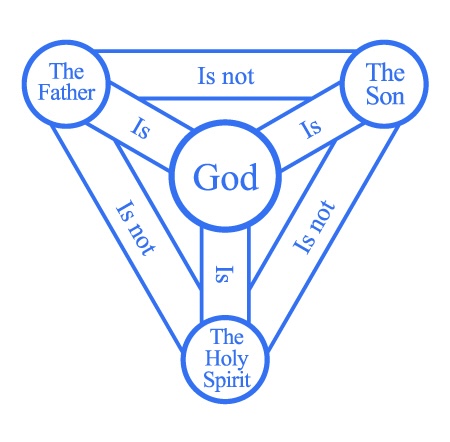
Explaining the Trinity can feel challenging, but the beauty lies in its simplicity and mystery. The Trinity means that there’s one God who exists in three persons—Father, Son, and Holy Spirit. Think of it this way: God is one being, but he expresses himself in three individual ways, all equally God, all working together.
Think of a single triangle and its three sides. Oneness and threeness together. Similarly, the Father, Son, and Holy Spirit are distinct yet singular. The Father creates and leads, the Son redeems and saves, and the Spirit guides and empowers. Together, they show us who God is and how he loves us so deeply.
While it’s amazing to think about, it’s okay not to fully understand it. God’s divine nature is so much bigger than we can wrap our minds around, but that’s part of what makes him so wonderful!