
When does human life actually begin? This question stirs deep debates within modern society and across the realms of science and religion. We at Reasons to Believe firmly believe human life begins at conception. That’s when a new human being emerges—one that’s genetically unique and, therefore, a distinct person.
But does science affirm that life begins at conception? Or is this a matter of personal belief? How do we connect scientific views with what the Bible says about when a new life starts?
Let’s explore these questions with an open mind, seeking to understand when life begins and what it means for people in our world today. We’ll examine scientific definitions, biological facts, and biblical insights into the time when a new human being begins and what these views mean for both faith and science.

When Does Life Begin According to Science?
Science confirms that human life begins at conception—the moment when sperm and egg fuse to form a zygote. From that instant, a genetically unique human being comes into existence, complete with distinct DNA.
This process, called fertilization, is widely recognized as the starting point of human life. In fact, 96% of biologists agree that life begins at fertilization, making it the prevailing scientific perspective.

This shared view among scientists is echoed by many OB/GYN physicians who advocate for recognizing the zygote as a new human life from conception. They affirm that the fertilized human egg has all the necessary genetic parts that define a new individual human life. Let’s track that journey from fertilization to birth.
Human Development Journey
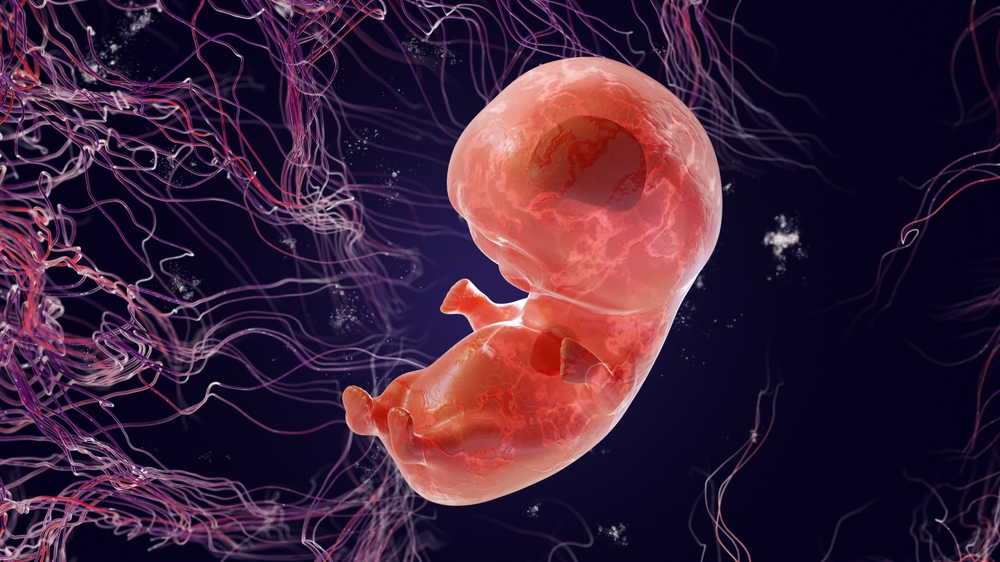
From the point of conception, the zygote goes through the development journey to become a fully formed human. Here are some of the major milestones:
Watch the following video to see the journey every human takes from fertilization to birth:
When Does Life Begin Medically?
Dual Patient Approach
The medical field considers both science and ethical responsibility when addressing the question of when life begins. Many medical professionals recognize the pregnant mother and her unborn baby as two distinct patients, highlighting the view of the unborn as a unique individual. This is known as the dual patient approach.
If a concern arises, medical staff are ethically required to consider the health and life of both human beings, both collectively and independently. This dual patient approach by the medical field supports the understanding that all human life begins at conception and each life is important.

What Does the Bible Say About When Life Begins?
According to the Bible, the question of when life begins is answered by considering teachings and principles found in Scripture. Psalm 139:13–16 artfully suggests that life begins in the womb, likely at conception. There, God is intimately involved in creating a person. The Bible affirms that he:
[. . .] knit me together in my mother’s womb
and
[. . .] saw my unformed body.
This Psalm not only stresses the sanctity of life from its earliest stages but also demonstrates remarkable scientific accuracy that matches well with what science tells us about human development.
Scientific and Scriptural Insights
Further support for the biblical viewpoint stems from studies about the placenta showing the extraordinary design and function needed to support new life. This research showcases what many see as the work of a Creator to protect and nourish an early, distinct life. Consequently, the placenta’s design argues against the idea that a fetus is “just a parasite.”
Instead, it shows the important relationship needed for growth and health. Plus, new findings in neuroscience reveal changes in a woman’s brain during pregnancy, spotlighting the profound biological and emotional changes that happen while caring for new life.
Some people use Genesis 2:7, where God breathes life into Adam, to say life begins with the first breath. But this idea doesn’t align with the full scriptural context.
Instead consider the similarity between Adam’s creation and yours when you were in the womb—God intricately created both up to the point of their first breath. In Luke 1, we read phrases like “the baby leaped in her [Elizabeth’s] womb,” and “the baby in my womb leaped for joy.” These expressions make it clear that what’s in the womb is a human life and there’s no indication that life doesn’t begin until that first breath is drawn.

Addressing Common Objections
When addressing common arguments against the pro-life view, such as why spontaneous abortions occur and the idea that Christians are only pro-birth and not pro-life, it’s important to think about these concerns carefully.
Understanding these sensitive topics will help us to have compassionate and informed conversations, based on both faith and facts.
Especially when we want to make a biblical case against abortion.
This approach honors the Bible’s view of when life begins and invites a deeper appreciation for the amazing scientific process that happens from conception to birth.
When Does “Personhood” Begin?
The debate over when “personhood” begins is a pivotal, often heated topic in discussions about human life. Many pro-choice supporters acknowledge that a human embryo or fetus is a human being, but they argue it is not the same as a human person.
This issue brings up two essential questions: What exactly defines a “person”? and Who decides the criteria for personhood? These questions show how unclear and arbitrary it can be to separate being a person from just being a human.

The Christian View of Personhood
From a Christian point of view, personhood starts at conception. At this point, a human being is, by definition, endowed with the image of God. This concept is known as the imago Dei. It affirms that every human, from the moment their history is set in motion, is a person because they bear this divine image which gives them inherent dignity and worth.
Challenges with Sentience and Self-Awareness
Critics often argue that attributes such as sentience (the ability to experience feelings and sensations) or self-awareness (consciousness) should define personhood. But these ideas often cause more problems.
- The capacity to feel or perceive is difficult to measure and varies widely among individuals.
- Likewise, self-awareness is a trait that develops over time and is not present at birth.
The lack of measurable standards for sentience or self-awareness leads to the question: Why should these characteristics serve as the benchmarks for personhood?
Such traits are not only arbitrary but can leave out individuals who are in certain developmental stages, such as infants or those with cognitive impairments.
Developmental Milestones and Personhood
Developmental milestones like a heartbeat, brain activity, or the ability to live outside the womb are sometimes used as markers of personhood. However, these are just stages of growth and don’t fully encase what it means to be a person. From a Christian viewpoint, personhood is linked to identity as image bearers of God, not on mere capacity for bodily function.
The Importance of Language in Human Value Discussions
The importance of using clear, precise language when talking about human value can’t be overstated. How we define “human” and “person” shapes our ethical and moral views about life and how we protect it. In the biblical worldview, every life is sacred from conception—a position that supports arguments against abortion by highlighting the value inherent to all human beings.
We encourage everyone to think about the language they use when discussing early human life. Important meanings and moral responsibilities arise from words and definitions.

Takeaway
The question of when human life begins according to science and the Bible is often deeply debated but should be likewise deeply researched and considered. Our minds should be open to facts and our hearts willing to reflect on something more than just ourselves and on what it means to be human.
People from all worldviews and backgrounds have thought about when a new human being begins. The majority agree that life starts at conception—not at 8 weeks or 24 weeks, and not at birth, but when the new human DNA is created.
There’s great support for the belief that life begins at fertilization, which in turn has important ethical and moral implications. It makes us think about the value of life from the very start and the need to care for and protect it, even before that life takes its first breath.
When we consider the evidence for when human life begins, we step into a profound truth—life is not an accident, it’s a purposeful gift. Science and Scripture together affirm that every human being is wonderfully made, intentionally created, and endowed with purpose from the very beginning.