
Have you heard the claim that we only use 10 percent of our brain? It’s one of those fascinating “facts” that gets passed around so often that it feels true. The idea has inspired books, movies, and casual conversations about the untapped potential of our minds.
But here’s the truth—it’s a myth.
The belief that we only use a tiny fraction of our brain simply doesn’t hold up to scientific scrutiny.
It’s understandable why this misconception exists, though. One of the most credible explanations behind the myth lies in the makeup of our brains. So, how much of our brain do we use? We’ll get into this question and more. Let’s dig in!
Do We Only Use 10 Percent of Our Brains?
Debunking the Myth
The belief that we use only 10 percent of our brain has been around for decades, and it’s certainly intriguing. The idea sparks our imagination—what if we could unlock the other 90 percent?
But here’s the straightforward truth: we use all of our brain. Every. Single. Part.
Scientific research—fMRIs, PET scans, and extensive neurological studies—has shown that our brain operates as a highly interconnected system, with different areas working together to keep us thinking, feeling, moving, and living.
You might be wondering, where did the 10 percent brain idea come from? Tracing its origins leads us to early twentieth-century psychologist William James, who once commented that humans use only a fraction of their mental resources.
This misconception likely gained momentum as people misunderstood the brain’s composition and the functions of the different cells.
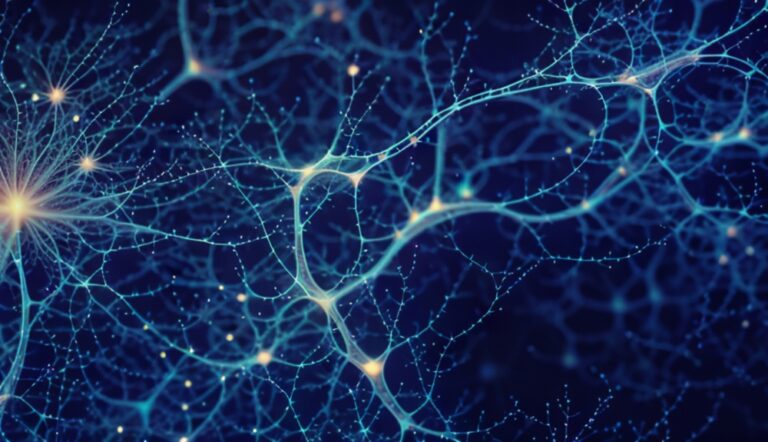
While it’s true that only about 10 percent of our brain’s cells are neurons, these neurons—our brain’s processors—don’t work alone. They rely on the remaining 90 percent of brain cells, which are a mix of glial cells, to function properly.
Recent findings even suggest that our intelligence depends on the entire brain functioning as a unified whole. Brain regions aren’t isolated from one another—they’re constantly communicating and forming connections to perform complex tasks.

What Science Tells Us About Full Brain Usage
Modern science has revealed many insights into how our brain actually works. General intelligence, for example, isn’t tied to just one part of the brain. It involves the prefrontal cortex and the parietal lobe—two regions with unique but complementary roles.
Researchers have found that the size of these brain areas, their thickness, and the density of their neural connections all contribute to how efficiently the brain thinks and solves problems.
Even the glial cells, which don’t get the spotlight as often as neurons, are critical to the brain’s operation. Think of glial cells as the behind-the-scenes crew at a big theater production. They keep everything running smoothly, and without them neurons wouldn’t be able to function with the precision we rely on every day.
Glial cells include astrocytes, oligodendrocytes, and microglia, and each plays a specialized role.
Together with neurons, the various glial cells form an intricate team that makes all the brain’s functions possible—from remembering where you parked to solving a challenging puzzle.
What Percentage of Our Brain Do We Use?
We Use 100% of Our Brain
If you’ve been wondering just how much of our brains we use, the answer might surprise you—we use 100% of it. Still, it’s intriguing (perhaps mystical) to imagine there’s some vast, untouched section of our brain waiting to be unlocked.
Science, however, shows that every part of our brain serves an important function. From everyday activities like speaking or thinking to controlling involuntary processes like breathing and internal regulation, the whole brain works together like a finely tuned orchestra.
But how does this incredible organ actually function? Let’s break it down into its key regions.

How Does the Brain Work?
Our brain is divided into three major regions, and each plays a vital role in keeping us alive and thriving.
1. The Brain Stem
The brain stem, located at the base of the brain, is like the conductor of your body’s basic operations. It connects the brain to the spinal cord and is split into three sections—the medulla, pons, and midbrain.
- medulla: handles automatic functions like breathing, heart rate, and digestion
- pons: coordinates facial movements, processes sensory information for balance, and helps regulate sleep and consciousness
- midbrain: controls eye movements, processes visual and auditory data, and helps regulate your body’s temperature
The brain stem is essential for survival. It quietly operates in the background to keep you alive and has clear functions that connect to the neuronal part of your brain.
2. The Cerebellum
Also known as the “little brain,” the cerebellum sits beneath the cerebrum and is primarily responsible for coordination. Every time you walk, type, or exercise, your cerebellum is hard at work. It also helps you maintain posture and balance—it ensures that the movements you’re using your brain to tell your body to do are smooth and under control.
3. The Cerebrum
This is the largest and most complex part of your brain. The cerebrum is the hub for higher level functions like thinking, reasoning, speech, and emotion. It’s divided into two hemispheres and four lobes:
- The frontal lobe handles personality, decision making, and movement. It also contains Broca’s area, which is critical for your ability to speak.
- The parietal lobe helps you identify objects and understand spatial relationships. It also plays a role in interpreting pain and touch.
- The occipital lobe is dedicated to vision, helping you process everything you see.
- The temporal lobes are involved in short-term memory, speech, and even musical rhythm.
The cerebrum gives us the ability to learn, feel, and interpret the world around us. It sets us apart as humans.
What Is the Capacity of the Human Brain?
Your brain’s capacity is nothing short of remarkable. It can hold and process vast amounts of information, allowing you to adapt, learn new skills, and solve problems.
While we may not fully understand just how far the limits of the brain stretch, one thing is clear: its capacity is immense and awe-inspiring.
Can We Increase Our Brain Power?
The idea of boosting our brain power may sound appealing, but the truth is, there’s no magic way to “increase” it. However, there are practical ways to ensure your brain functions at its best:
- Keep learning: Challenge your brain with new skills and knowledge to keep it sharp.
- Be creative: Engage in activities like painting, writing, or playing music to stimulate your mind.
- Get plenty of rest: Sleep allows your brain to recover and helps consolidate memories.
- Exercise regularly: Physical activity increases blood flow to the brain, promoting healthy function.
- Stay socially active: Meaningful interactions with others help improve cognitive health.
Unsolved Mysteries of the Brain
The Claustrum: The Mystery Behind Focus and Consciousness
One part of the brain that keeps neuroscientists puzzled is known as the claustrum. This small, thin structure is deeply connected to almost every part of the cerebral cortex, including areas that control vision, hearing, and movement. Despite its extensive connections, we don’t actually know what it does.
Some researchers believe the claustrum might be linked to consciousness, possibly acting as a central hub that helps coordinate the different brain functions. Others think it may play a key role in our ability to focus. As of now, though, its purpose remains one of the brain’s most intriguing enigmas.
The Pineal Gland: From “Third Eye” to Sleep Regulator
For centuries, cultures thought of the pineal gland as a “third eye” having mystical or spiritual significance. It sat at the crossroads of mythology and medicine, shrouded in mystery for much of history.
Today, we understand that the pineal gland plays a key role in regulating your body’s internal clock. Shaped like a tiny pine cone (hence its name), this deep brain structure produces melatonin, the hormone that controls your sleep-wake cycle.
But even with this modern insight, it’s hard not to look back on its mythical reputation and marvel at just how much mystery the brain can hold.
Consciousness: The Great Unknown
Consciousness might be the greatest mystery of all. What does it mean to be aware—of yourself, your surroundings, and your thoughts? Scientists still struggle to define it, much less explain it. Part of the challenge is the difficulty in scientifically studying something that resides in each individual’s mind.
We don’t have a clear understanding of where consciousness resides in the brain.
Is it localized to a specific region? Is it connected to certain neural networks? Or could it even exist beyond the physical brain in some immaterial way?
These unanswered questions leave plenty of room for wonder and speculation—not just for neuroscientists but also for philosophers and theologians.
Memory Formation and Storage
Our ability to remember experiences, both big and small, seems almost magical, and the process behind it is far from understood. Scientists believe memories are formed when groups of neurons, called engrams, activate during a specific experience. These engrams then undergo changes to store that information.
The hypothalamus is thought to act as a temporary holding area for memories before they’re consolidated and stored more permanently in other parts of the brain.
But how does the brain decide what’s worth remembering? And where, exactly, are these memories located?
Questions about memory run deep.
How are different types of memories processed? Are they stored in separate regions of the brain? What are the mechanisms that allow us to recall events, sometimes decades later, with stunning clarity?
These complex mysteries have led some experts to propose that memories may not be purely physical, but could be tied to aspects of our immaterial, spiritual nature.
While these mysteries can be frustrating from a scientific perspective, they’re also what makes studying the brain exciting. They remind us that there’s more to discover and more adventure to be had. The more we uncover, the more we realize just how intricate and inspiring our brains truly are.

The Brain & the Creator
Is the Human Brain Evidence of a Designer or of Evolution?
When we gaze at the intricacy of the human brain, we can’t help but marvel at its complexity. Its precise processes and fine-tuned functionality suggest something far more sophisticated than the random chance origin proposed by evolution. The way the brain seamlessly integrates countless operations—simultaneously every moment of our lives—points to an architect’s purposeful design.
Our brain’s incredible performance provides another clue. Sophisticated computer systems and AI software can’t match the flexibility, creativity, or raw processing power of the human brain. Even in fields like artificial intelligence, the human brain serves as the model for neural networks—systems inspired by the way our brain cells communicate.
Could something so intricate truly be the product of unguided evolution? Many people believe the evidence points to intelligent design and is a reflection of God’s handiwork.
How Our Brain Reflects Our Creator
Humans are made in God’s image, and our brains give us capabilities that go beyond mere survival—they allow us to thrive. Take language, music, and art as examples.
These aren’t just skills. They’re unique gifts rooted in the exceptional design of the brain. Through these gifts we express beauty, emotion, and meaning that reflect the creativity of the Creator himself.
Humans aren’t simply biological machines with thoughts running through our heads. The relationship between our brain, mind, and spirit (soul) is a dynamic one, where each shapes the other.
This unity gives a glimpse into God’s design for us as whole beings. We’re not just composed of flesh; we’re spiritual beings made with purpose.
Our capacity for language, reasoning, and deep reflection enables us to seek out and understand the messages from our Creator. Through nature, Scripture, and Jesus Christ, God has revealed himself to us in ways only our minds can grasp.
The brain may very well be one of the most remarkable things in all of creation, but it’s only a piece of the larger story. Its design points us to God the Designer, and its capabilities allow us to connect with him.
While we may never fully unravel all the mysteries of the mind, we can rest in the knowledge that it reflects the beautiful complexity, care, and purpose of the One who created it.