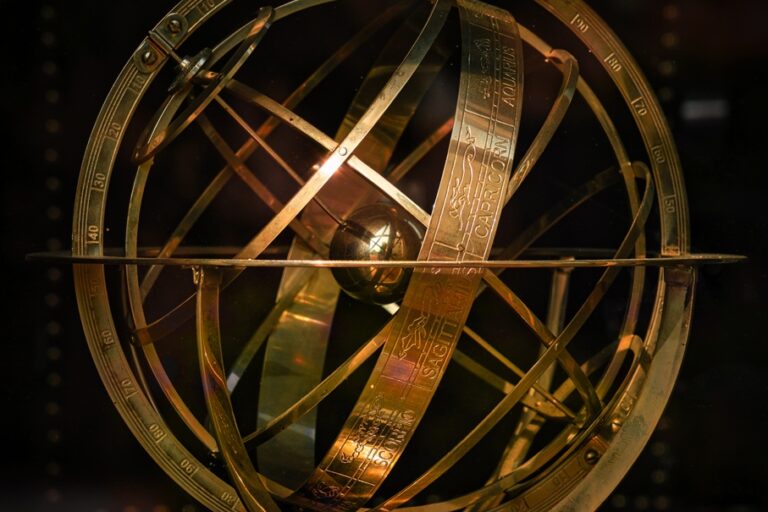

When we look up at the night sky, many of us feel a sense of wonder and curiosity about the cosmic dance happening above us. For some, the stars, solar system, and astronomical phenomena are simply beautiful elements of our universe. For others, they hold deeper meaning—perhaps even influence over a person’s life and their personalities.
The question, “Is astrology real?” is one that millions of people contemplate. In the US alone, a recent study revealed that roughly 60 percent of American adults accept at least one “New Age” belief, with nearly a third specifically believing in astrology.
Even more surprising, many who identify as Christians also embrace these beliefs in their own life alongside their faith.
But what does scientific study and the evidence actually tell us? And more importantly, what guidance does the Bible offer on astrology and its practices?
What is Astrology?
Astrology is the ancient belief system that the stars—which includes various celestial bodies (planets, moons, solar systems, etc.)—set the destinies for individual people, groups of individuals, and for the events among nations.
In practice, astrologers attempt to use the positions of celestial bodies to make predictions about the lives and affairs of human beings and the events among nations in the world. Astrologers believe that the positions of the stars and planets at the specific time of a person’s birth affect their personality, temperament, mood, environment, and future course of life events.
Astrologers then use these calculations to create horoscopes that are personalized by specific dates of birth to both predict and affect one’s destiny. While some astrologers study the balance of elements in a person’s horoscope to interpret their personality, others use astrological calculations to help people make decisions and optimize their personal strengths in life.
Where Did Astrology Come From?
The practice of astrology has deep roots in the ancient world and originated in Mesopotamia as early as the third millennium BC. Astrology was initially used to interpret celestial cycles and predict seasonal shifts.
- The Babylonians used the stars and planets to interpret omens from the various gods. They developed the zodiacal system, which divides the heavens into twelve constellations.
- The ancient Egyptians believed that constellations were patterns of stars that the sun appeared to traverse through at specific times of the year.
- In ancient China, noblemen used eclipses and sunspots to predict good or bad times for the reign of a given emperor.
- The ancient Mesopotamians and Egyptians are generally considered the originators of the Western practice of astrology. Astrology spread to India and China.
- The ancient Greeks developed the zodiac symbols and names used in today’s astrology.
The Greeks are credited with distinguishing the scientific practice of astronomy from astrology, with Claudius Ptolemy, an astrologer and astronomer from Alexandria, Egypt, establishing the foundation of Western astrology in his book Tetrabiblos.
Why Are People So Intrigued by Astrology?
People are drawn to astrology for numerous complex reasons that blend spiritual seeking, psychological needs, and cultural influences. Here are some of the main factors:
- From a biblical perspective, the heavens exhibit the glory of God (Psalm 19:1–4). So people, whether they are fully aware of it or not, are receiving general revelation about the nature and glory of God. This is a spiritual, moral, and aesthetic experience and people may mistakenly associate aspects of this revelation with the claims of astrology.
- Again from the Bible, the fallen nature of human beings makes worshippers into idolaters (Romans 1). Sinful people have a natural tendency to reject God but they intuitively replace him in their worship with other objects, with the cosmos being an attractive alternative. Some people even view astrology as a way to explore their spirituality and to connect with the cosmos in a spiritual and religious way.
- People have an important aesthetic appreciation and attraction. Since the heavens abound with a beauty all their own, that natural aesthetic serves to draw people to its gaze and to consider its purpose and significance in life.
- One of the practical factors in our everyday lives is the need and desire to gain objective insights about one’s personality, relationships, and critical life events. Astrology offers a sense of guidance by providing interpretations via the so-called wisdom of the stars.
- From a practical perspective, astrology can serve as a convenient, inexpensive, and easy coping mechanism. During difficult times of stress, anxiety, and uncertainty in life, astrology can offer a sense of structure and predictability, allowing people to feel more in control of their complex lives.
- Astrology can offer social connection and a sense of belonging with people who together seek wisdom, knowledge, and guidance through their common zodiac sign and horoscope predictions.
Statistics on Belief in Astrology:
- The American Federation of Astrologers indicated that about 70 million Americans read their horoscope daily.
- In 2018, 29% of American adults said they believed in astrology, including 26% of Christians.
- In 2022, 27% of Americans said they believed in astrology, including 37% of adults under 30.
- In 2024, 70% of Americans said they either “somewhat” or “strongly” believed in astrology.
The Difference Between Astrology and Astronomy
While astrology and astronomy have very different definitions today, historically, the scientific discipline of astronomy grew out of the practice of astrology.
Astronomy researches everything outside of the earth’s atmosphere, including celestial realities such as planets, stars, asteroids, comets, black holes, galaxies, and the broader universe itself. This systematic scientific study involves principles of mathematics and physics, using direct observation and testing, critical features of science.
In contrast, astrology is a belief system that assumes the positioning of stars and planets influences human events and behavior. The Western scientific community views astrology as pseudoscience because it lacks a scientific basis grounded in observation and testing.
Reasons to Believe’s (RTB) staff scholars and scholar community include PhD-trained scientists who are professional astronomers, astrophysicists, and cosmologists.
How Does Astrology Work?
Astrology is the mystical/magical belief system that the alignment of celestial bodies affects every individual person’s mood, personality, and environment, depending on when he or she was specifically born. Astrologers draw information from the zodiac and print horoscopes in newspapers and other sources that are personalized to one’s birth date.
The practice centers around creating and interpreting natal charts (sometimes called birth charts), which are essentially maps of where all the planets were located at the exact moment you were born. Astrologers believe these celestial positions influence different aspects of your personality and life.
For example, the position of the Sun determines your “sun sign” (the zodiac sign most people identify with), while the Moon’s position allegedly influences your emotions and private self. Each planet supposedly governs different areas of life—Venus for love and relationships, Mars for energy and aggression, Jupiter for luck and growth, etc.
Modern astrologers have expanded these basic interpretations into complex systems involving “houses” (representing different life areas) and “aspects” (the angles between planets). Different astrological traditions (Western, Vedic, Chinese) have their own variations of these principles.
Many astrologers claim to personalize readings based on these celestial patterns, creating the impression of a tailored message from the cosmos. In actuality, as we’ll see, there’s little evidence supporting these claims beyond coincidence and psychological factors.
Is Astrology True?
To help answer this thoroughly, we’re breaking it down into multiple questions that can be clearly defined and answered.
Is Astrology Real?
Horoscopes tend to work (appearing true, real, and accurate) but in a tricky and deceiving manner. Horoscope columnists write daily predictions that are applicable but also quite flexible. They can seem personal, giving the illusion of genuine knowledge and truth, but are often vague enough to avoid the risk of falsification.
John Ferrer writes: “Let’s be clear, though. By all scientific measures, horoscopes, the zodiac, and astrology lack reliable, specific, explanatory, or predictive power. Horoscopes do not ‘work’ in any scientifically credible way. They only seem to work because of different cognitive biases and parlor tricks like confirmation bias, the Barnum effect, cold-reading, placebo effect, educated guessing, self-fulfilling prophecy, and raw probabilities.”
From a Christian perspective, we need to consider whether there might be spiritual forces involved in astrology. The Bible warns about deception and spiritual practices that draw us away from God. While many people approach astrology casually, Scripture indicates that divination practices can potentially open doors to spiritual influence that isn’t divine in origin.
This doesn’t mean every horoscope reader is experiencing direct demonic influence, but it does suggest we should approach these practices with spiritual discernment and caution. The apparently “working” nature of astrology for some people might stem from psychological factors—or in some cases, from spiritual sources that Scripture warns against.
Is Astrology Accurate?
When it comes to horoscopes, they are overly general and lacking in specificity. Astrology has been shown to be highly unreliable in providing genuine information about people’s lives. Horoscopes never seem to make direct claims that can be objectively proven true or false.
Several psychological phenomena explain why people might feel astrology is accurate:
- The Barnum effect: This is the tendency to accept vague, general statements as uniquely applicable to oneself. Horoscopes typically contain statements that could apply to almost anyone.
- Confirmation bias: We naturally remember the hits and forget the misses. If your horoscope makes ten predictions and one comes true, you’re likely to remember only the accurate one.
- Self-fulfilling prophecy: If your horoscope says you’ll have a confrontation today, you might become more defensive or sensitive, actually creating the predicted outcome.
Many scientific studies have examined astrological accuracy. In one famous experiment, psychologist Bertram Forer gave students a “personalized” personality assessment that was actually identical for everyone. Despite receiving the same generic description, students rated the accuracy of their “personal” assessment as 4.26 out of 5 on average.
Similar experiments have repeatedly demonstrated that people typically can’t distinguish between genuine astrological readings and random or fake ones.
Is There Any Truth in Astrology?
Truth has traditionally been defined as that which corresponds to reality (reflecting a realist or correspondence theory of truth). Astrology has a very poor record when it comes to the real and the true. Astrology trades on deception and doesn’t risk the chance of being shown false. Astrology is also an act and practice that the Creator God of the Bible forbids and condemns.
While the cosmos certainly reveals God’s glory as the psalmist declares, astrology misinterprets this revelation. Rather than pointing to the Creator, it elevates the creation itself as the source of meaning and guidance. This fundamental error takes us away from rather than toward ultimate Truth.
From a Christian perspective, truth isn’t merely factual accuracy but alignment with God’s revelation and purposes. Astrology may occasionally stumble upon factual truths by chance, but it isn’t rooted in the Truth that sets us free. Instead, it presents an alternative system of meaning that competes with biblical revelation.

Astrology and Science: Is Astrology Scientific?
The scientific community widely criticizes astrology as a pseudoscience due to a lack of evidence supporting its claims, inconsistent results in testing, no plausible mechanism for how celestial bodies could influence human lives, and the inability to make falsifiable predictions, meaning it cannot be definitively disproved through scientific methods. Essentially, astrology fails to meet the basic criteria of a scientific theory.
What Types of Tests and Experiments Have Scientists Performed on Astrology?
The basic scientific problem with astrology is that it fails to explain how the positions of planets and stars could in fact exert a physical force on humans to influence their personalities or life events.
Numerous scientific studies have failed to find any evidence supporting astrological predictions beyond chance occurrences and manipulation. Let’s look at some notable scientific examinations of astrology:
- The Carlson Double-Blind Study (1985): This landmark study published in Nature asked professional astrologers to match birth charts to psychological profiles. Under controlled conditions, the astrologers performed no better than chance.
- The McGrew and McFall Study (1990): This examination tested whether astrologers could match natal charts to psychological profiles of individuals. Again, the results showed no better than random matching.
- The Shawn Carlson Study (1985): In another controlled experiment, astrologers failed to match birth charts with the correct California Psychological Inventory profiles of test subjects.
- Statistical Analysis of Personality Traits: Multiple studies have examined whether people born under the same sign show similar personality traits. These studies consistently find no correlation between birth signs and personality.
- Twin Studies: Research examining the lives of twins (born minutes apart under identical astrological conditions) shows significant divergences in personality and life outcomes, contradicting astrological expectations.
- Michel Gauquelin’s Mars Effect: Though initially suggesting a statistical correlation between athletic champions and Mars’s position at birth, subsequent rigorous analysis failed to replicate these findings when selection biases were controlled.
What’s particularly notable is that when astrologers are tested under scientifically controlled conditions that prevent cold reading and other psychological techniques, their accuracy falls to levels consistent with random chance.
Does Psychology Influence the Belief in Astrology?
Psychology can significantly influence the belief in astrology. For example, factors like the Barnum effect, personality traits like openness and narcissism, and the deep desire for meaning in life contribute to why people might find astrology personally appealing.
Several psychological factors help explain why astrology remains popular despite lacking scientific support:
- The Barnum Effect: Named after P. T. Barnum, this effect occurs when individuals believe vague, general statements apply specifically to them. Astrological readings typically contain statements general enough to apply to almost anyone, yet people perceive them as uniquely personal.
- Illusion of Control: In times of uncertainty or stress, astrology can provide a sense of order and predictability, helping people feel they have some control over unpredictable aspects of life.
- Confirmation Bias: People tend to remember predictions that come true while forgetting those that don’t, reinforcing their belief in astrology’s accuracy.
- Need for Meaning: Humans naturally seek patterns and meaning in life events. Astrology provides ready-made explanations for personality traits, relationships, and life challenges.
- Self-Discovery Tool: Regardless of its validity, many people use astrological frameworks as tools for self-reflection and understanding.
- Social Identity: Identifying with a zodiac sign can provide a sense of belonging and social identity, fulfilling basic psychological needs.
- Cognitive Dissonance: Once someone has invested time and identity in astrological beliefs, they’re likely to interpret new information in ways that support rather than challenge these beliefs.
Research has also found that people are more likely to turn to astrology during times of personal crisis or stress. One scientific study showed increased internet searches for astrological information following economic downturns or political uncertainty.
These psychological factors don’t mean astrology works—just that our minds are predisposed to find meaning in such systems regardless of their objective validity.
What Does the Bible Say About Astrology?
The Bible forbids involvement with the secret and hidden practices of the occult. Historic (biblical) Christianity forbids involvement with all types of divination (the practice of using omens, rituals, or supernatural powers to gain insight into the future or the present).
The Bible’s stance on astrology and divination is remarkably consistent throughout both the Old and New Testaments. God repeatedly warns his people against seeking guidance from the stars rather than from him directly.
In Deuteronomy 18:10–12, we find a comprehensive prohibition: “Let no one be found among you who sacrifices their son or daughter in the fire, who practices divination or sorcery, interprets omens, engages in witchcraft, or casts spells, or who is a medium or spiritist or who consults the dead. Anyone who does these things is detestable to the LORD; because of these same detestable practices the LORD your God will drive out those nations before you.”
Isaiah 47:13–14 specifically addresses astrologers: “All the counsel you have received has only worn you out! Let your astrologers come forward, those stargazers who make predictions month by month, let them save you from what is coming upon you. Surely they are like stubble; the fire will burn them up. They cannot even save themselves from the power of the flame.”
In the New Testament, Acts 19:18–19 describes new believers renouncing divination practices: “Many of those who believed now came and openly confessed what they had done. A number who had practiced sorcery brought their scrolls together and burned them publicly
These passages reveal that seeking guidance from the stars rather than from God is not merely misguided but actively opposed to God’s will for his people. From a biblical perspective, astrology represents a form of spiritual rebellion—looking to creation rather than the Creator for ultimate guidance.

Horoscopes
Horoscopes are perhaps the most widespread expression of astrological practice in contemporary culture. These daily, weekly, or monthly forecasts purportedly offer insights into your future based on your birth sign. But what does the Bible say about horoscopes?
Scripture makes it clear that only God knows the future (Isaiah 46:9–10), and attempting to divine it through other means constitutes a form of spiritual infidelity. Horoscopes represent a substitute for divine guidance—offering a counterfeit form of wisdom that the Bible explicitly warns against.
The deceptive nature of horoscopes aligns with what Scripture tells us about false prophets and teachings. In Matthew 7:15, Jesus warns about false prophets who “come to you in sheep’s clothing, but inwardly they are ferocious wolves.” Horoscopes may seem harmless or even helpful, but they can lead people away from genuine spiritual truth.
From a practical standpoint, horoscopes typically offer vague predictions that could apply to almost anyone. This ambiguity allows readers to project their own meanings onto the text—creating an illusion of insight without delivering genuine prophetic knowledge. The Bible, by contrast, affirms that God’s guidance is clear, truthful, and aligned with his character and purposes.
Christians seeking guidance should turn to prayer, Scripture, and the counsel of mature believers rather than horoscopes. As James 1:5 promises: “If any of you lacks wisdom, you should ask God, who gives generously to all without finding fault, and it will be given to you.”
Zodiac Signs & Celestial Bodies
The concept of zodiac signs emerged from ancient Babylonian astrology and was later refined by Greek astronomers. These twelve signs, each associated with a constellation, allegedly influence human personality and destiny based on the Sun’s position at birth.
Some Christians who use astrology may refer to Psalm 19:1:
The heavens declare the glory of God; the skies proclaim the work of his hands.
Yes, God created the stars, but the stars weren’t created for our personal divination or revelation.
While Scripture acknowledges the beauty and order of the universe, it consistently points to it all as evidence of God’s creative power—not as sources of personal guidance. Genesis 1:14 states that God created the stars “to separate the day from the night” and “to mark sacred times, and days and years.” Their purpose is to aid in navigation and timekeeping, not to dictate human personality or destiny.
Some Christians who use astrology will point out the magi (three wise men) as astrologers, as if that supports/condones the practice. As Joe Carter explains: “Their description of seeing a celestial body as a portent of a significant event appears to be a type of mundane astrology (i.e., the study of significant celestial moments to social groups, nations, or all of humanity). Even if the magi (a term from which we get the word ‘magic’) were actual astrologers, this would not be a biblical endorsement of astrology. Instead, it would be an example of how even pagans would recognize Jesus as God.”
The magi’s journey illustrates how God can use various means to draw people to himself, even working through imperfect understanding. However, their story doesn’t validate astrological practices any more than Balaam’s story validates pagan divination (Numbers 22–24).
In fact, the magi story reveals something profound: these stargazers ultimately abandoned their astrological instruments to bow before the incarnate Word of God. Their journey represents movement away from various forms of divination toward direct worship of the true Source of wisdom.
The True Source of Wisdom
If astrology and horoscopes don’t provide reliable guidance, where should we turn? The Bible points us to God himself as the ultimate source of wisdom and direction for our lives.
God’s Word
The Bible includes many references to wisdom, especially in Proverbs, Psalms, and Ecclesiastes.
Consider the following verses from the book of Proverbs:
- Proverbs 2:6: “For the LORD gives wisdom; from his mouth come knowledge and understanding”
- Proverbs 1:7: “The fear of the LORD is the beginning of knowledge”
- Proverbs 11:2: God’s wisdom is a safeguard for our lives
- Proverbs 16:16: Wisdom and insight are more valuable than material wealth
- Proverbs 19:20: “Listen to advice and accept discipline, and at the end you will be counted among the wise.”
Consider also the following verses from the New Testament book of James:
- James 1:5: “If any of you lacks wisdom, you should ask God, who gives generously to all without finding fault, and it will be given to you.”
- James 3:17: “But the wisdom that comes from heaven is first of all pure; then peace-loving, considerate, submissive, full of mercy and good fruit, impartial and sincere.”
Unlike astrological guidance, biblical wisdom comes with clarity and purpose. It’s not about divining the future but developing discernment to navigate life’s challenges with God’s character as our compass. While horoscopes offer vague predictions applicable to anyone, Scripture provides specific principles that transform our thinking and living.
God’s wisdom also comes through prayer, thoughtful study of Scripture, counsel from mature believers, and the gentle guidance of the Holy Spirit. These sources of wisdom bring us into closer relationship with God—unlike astrology, which creates dependence on impersonal cosmic forces.
True wisdom isn’t about knowing what will happen tomorrow; it’s about knowing the One who holds tomorrow. As we grow in relationship with God, we develop the discernment to recognize his guidance in our daily lives.