

Have you ever encountered a puzzling biblical verse that made you stop and think? We’re going to take a look at one of the most fascinating and mysterious subjects: The Nephilim in the Bible. These puzzling figures have sparked countless debates and theories among scholars, theologians, and curious minds alike. But who exactly were the Nephilim? Were they giants, fallen angels, or something else entirely?
In this article, we’ll explore the fascinating world of the Nephilim, examining their origins, characteristics, and potential scientific explanations. We’ll also delve into how this topic intersects with both faith and science, demonstrating that these two views can indeed complement each other.
Let’s start by taking a closer look at Genesis 6:4, which gives us our first glimpse of these beings: “The Nephilim were on the earth in those days—and also afterward—when the sons of God went to the daughters of humans and had children by them. They were the heroes of old, men of renown.”
This single verse has sparked centuries of speculation and debate. But we’re here to unravel this mystery, combining biblical insights with scientific perspectives to paint a clearer picture of who the Nephilim might have been.

The Nephilim: Who Were They?
To truly understand the Nephilim, we need to start with the basics. Let’s begin by exploring the Nephilim meaning and its origins in ancient Hebrew.
Important Biblical Context
As with any proper investigation of what the Bible means, we must first identify the context. As mentioned above, the Nephilim are mentioned in Genesis 6:4. Consequently, many people associate the Nephilim with an introduction to God’s judgment in the flood. If Genesis 6:1–4 is setting the stage for the flood, then the interactions between the “sons of God” and “daughters of humans” and the Nephilim represent the depraved wickedness that leads to God’s judgment in the flood of chapters 6–8.
However, many grammatical and textual clues indicate that Genesis 6:1–4 provides an epilogue to the genealogy of Genesis 5 rather than a prelude to the flood of Genesis 6. In other words, Genesis 6:1–4 summarizes the state of humanity to close out the list of godly men in the previous chapter. Note that the text indicates the Nephilim were in the land during (and after) the time when the union of the sons of god and daughters of humans happened. Further, the Nephilim are described as “heroes of old” and “men of renown.”

Nephilim in Hebrew
The term “Nephilim” comes from the Hebrew word “נְפִילִ” (nephilim), which is the plural form of “נָפִיל” (naphil). This language can provide clues to understanding ancient texts. In this case, the root word “naphal” means “to fall” or “to cast down.” This etymology has led many scholars to interpret the Nephilim as “those who fall upon others” (because of their might), “fallen ones” or “those who have fallen.”
What Were the Nephilim?
But what does this mean in the context of the Bible? The Bible doesn’t give us a clear-cut definition, which has led to a variety of interpretations over the centuries. Some interpret this “falling” as a reference to fallen angels, while others see it as a metaphorical description of mighty warriors who would cause others to “fall” in battle.
Some scholars believe the Nephilim were simply powerful human warriors or rulers. Others argue they were the offspring of angels and humans, creating a race of superhuman beings. And then there are those who interpret them as giants, based on later biblical references.
The Origin of the Nephilim
So where did these Nephilim come from? Many think the Bible gives us a tantalizing clue in Genesis 6:4, mentioning that they appeared when the “sons of God” mated with the “daughters of humans.”
But who were these “sons of God”? Again, interpretations vary. Some believe they were fallen angels, drawing connections to other biblical passages that use similar terminology. Others argue they were simply godly men from the line of Seth who intermarried with ungodly women from the line of Cain.
Dr. Hugh Ross, in his book Navigating Genesis, offers an intriguing perspective on this. He suggests that the Nephilim might have been “morally flawed beings who used their superhuman size and strength to fight for the ungodly Canaanites and Philistines” (Ross, Navigating Genesis). This interpretation combines elements of both the angelic and human theories, proposing a unique origin for these beings.
However, we should remember that Genesis 6:4 does not actually say that the Nephilim appeared when the “sons of God” mated with the “daughters of humans.” Rather, the text says that the Nephilim were “on the earth in those days—and afterward.” The Nephilim may simply be otherwise normal humans who experienced exceptionally long life because they “walked with God” like Enoch and Noah.

What Happened to the Nephilim?
So, we’ve explored who the Nephilim might have been and where they came from. But what happened to them? Did they just disappear, or is there more to their story?
According to the biblical narrative, the Nephilim were present on Earth before the great flood described in the story of Noah. This has led many to assume that they were wiped out along with the rest of humanity during this event. However, the Bible also mentions Nephilim after the flood, which raises some intriguing questions.
How Did Nephilim Survive the Flood?
Now, this is where things get really interesting. If the Nephilim were wiped out in the flood, how do we explain their appearance in later biblical texts? This question has puzzled scholars and Christians for centuries, and there are a few theories to consider.
One perspective, as mentioned in our blog post here, is that the Nephilim arose a second time after the flood. This theory suggests that whatever conditions or circumstances led to the appearance of the Nephilim before the flood occurred again afterward.
However, it’s important to note that Christians differ on this point. Some argue the mentions of Nephilim post-flood are using the term as a general description for powerful warriors or rulers, rather than referring to the same beings before the flood.
This debate is a perfect example of how a single biblical term can lead to such diverse interpretations and theories, with each scholar and Christian piecing together clues from the text to form their own hypothesis.
From a scientific perspective, the idea of a global flood wiping out all life except for those on Noah’s ark presents some challenges. However, if we consider the possibility of a large, localized flood event, it becomes easier to reconcile the biblical account with geological evidence. Some Christians use this approach to explore the possibility that certain populations, including the Nephilim (if they were a distinct group), might have survived in areas unaffected by the flood. However, RTB has always held the position that, though the flood was local, no human escaped its judgment (except Noah and his family on the ark).

How Big Were the Nephilim?
Now, let’s tackle one of the most intriguing aspects of the Nephilim legend—their size. Were they really as big as some stories suggest? Let’s break this down into a few key questions.
How Tall Were the Nephilim?
When it comes to the height of the Nephilim, there’s a lot of speculation and interpretation. The Bible doesn’t give us exact measurements, but it does provide some interesting clues.
In Numbers 13:33, the Israelite spies describe the inhabitants of Canaan (whom they associate with the Nephilim) as making them feel like grasshoppers in comparison.
This description has led many to imagine the Nephilim as truly gigantic beings. Some ancient texts, like the Book of Enoch, describe the Nephilim as being hundreds of feet tall.
However, more conservative estimates, based on other biblical references to giants, suggest heights more in the range of 9 to 14 feet. For example, Goliath is described as being nearly 10 feet tall in 1 Samuel 17:4.
From a scientific perspective, these extreme heights pose some interesting questions. The human body has physiological limits to how tall it can grow while still functioning properly. Extremely tall individuals often face health problems related to their size. So, if the Nephilim were as tall as some interpretations suggest, they would have been truly extraordinary beings from a biological standpoint.
How Strong Were the Nephilim?
Now, let’s consider the strength of the Nephilim. Again, the Bible doesn’t give us specific numbers for these beings, but the descriptions of their might and the fear they inspired in others suggest they were exceptionally strong.
It’s mentioned that Goliath, who some associate with the Nephilim tradition, wore a coat of armor weighing about 125 pounds. That’s like walking around with a medium-sized person strapped to your chest! And he was able to move and fight in this getup. Talk about a heavy-duty workout!
From a scientific perspective, strength often correlates with size, but it’s not always linear. Larger animals generally have more absolute strength, but smaller animals often have greater strength relative to their body weight. If the Nephilim were indeed giants, they would likely have possessed tremendous absolute strength, but their relative strength might not have been as impressive as their size suggests.
The Nephilim’s strength might also be partly metaphorical or exaggerated. Ancient near-Eastern literature often used hyperbole to describe mighty warriors or significant figures. So, while the Nephilim likely were very strong, we should be cautious about taking every description at face value.
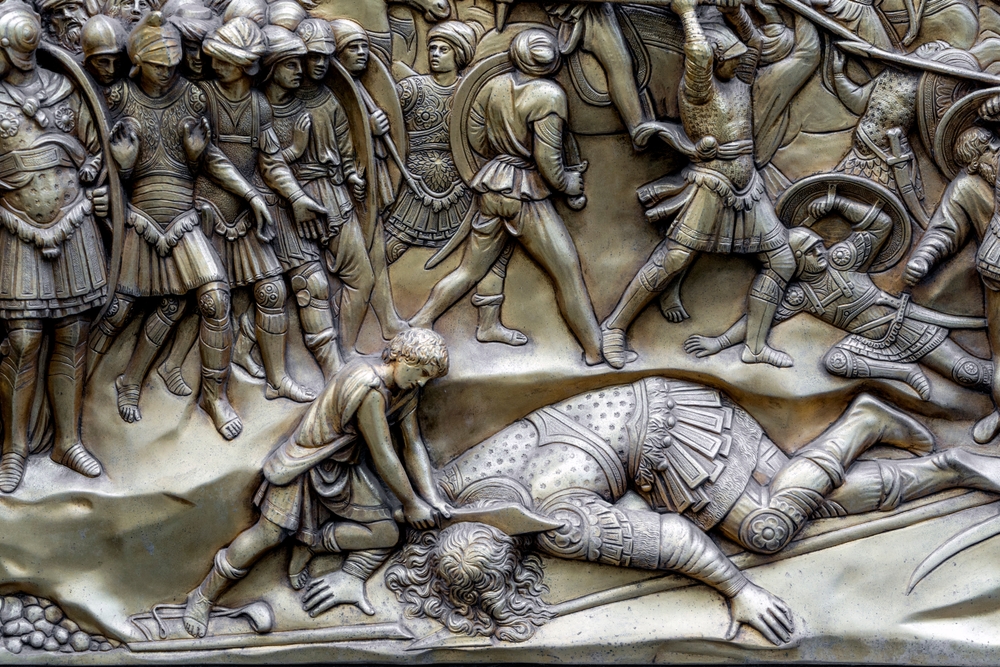
Nephilim: Giants from the Bible?
Now that we’ve explored the size and strength of the Nephilim, let’s tackle the big question: were the Nephilim actually giants, or is this just a misinterpretation of ancient texts? We’ll explore this both biblically and scientifically.
Are Nephilim Giants?
The association of the Nephilim with giants is a common one, but it’s not without controversy. The Hebrew word “Nephilim” itself doesn’t necessarily mean “giants,” remember? We discussed earlier that it more likely means “fallen ones” or “those who cause others to fall.” So where does the giant idea come from?
Well, it’s largely due to later biblical references and translations. For example, in Numbers 13:33, the Nephilim are described as being very large, making the Israelite spies feel like grasshoppers in comparison. Additionally, some ancient translations, like the Greek Septuagint, translated “Nephilim” as “gigantes,” which is where we get our English word “giant.”
But here’s where it gets tricky. The term “giant” in ancient literature didn’t always mean what we think of as giants today. It could refer to people who were simply taller or more physically imposing than average, not necessarily the skyscraper-sized beings we might imagine.
From a scientific perspective, the idea of a race of super-tall humans raises some interesting questions. While we know that human height can vary significantly based on genetics and environmental factors, there are physiological limits to how tall a human can grow and still function effectively. The tallest person in recorded history, Robert Wadlow, was 8 feet 11 inches tall, and he faced significant health challenges due to his size.
So, were the Nephilim giants in the literal sense? It’s possible they were simply very tall and strong individuals, perhaps in the range of 7–9 feet tall, which would have seemed gigantic to the average person in ancient times. Or, the descriptions of their size could be partly metaphorical, emphasizing their power and influence rather than their literal physical stature.
Was Goliath a Nephilim?
Many people associate Goliath with the Nephilim, but is this connection accurate? Goliath is described in 1 Samuel 17:4 as being “six cubits and a span” tall, which translates to around 9 feet 9 inches. That’s certainly in the range of what many people imagine when they think of the Nephilim. Plus, Goliath was a Philistine, and some interpretations link the Philistines to the Nephilim or their descendants.
However, it’s important to note that the Bible never explicitly calls Goliath a Nephilim. He’s referred to as a “champion” and a “giant,” but the specific term “Nephilim” isn’t used. So while Goliath might fit the image of what we think a Nephilim might have been like, we can’t say for certain that he was one.
Some ancient manuscripts give Goliath’s height as “four cubits and a span,” which would be closer to 6 feet 9 inches. While still very tall for the time, this height is within the realm of what we see in exceptionally tall humans today. This discrepancy in the ancient texts adds another layer of complexity to our understanding of Goliath and his possible connection to the Nephilim.
From a scientific perspective, Goliath’s described size and strength could potentially be explained by a condition like gigantism, caused by an overproduction of growth hormone. This condition can result in individuals growing to extraordinary heights, often accompanied by increased strength. This condition also typically comes with health problems, which aren’t mentioned in Goliath’s case.

Giants from the Bible—Other Biblical Giants
While the Nephilim are perhaps the most famous “giants” in the Bible, they’re not the only ones mentioned. Let’s take a tour of some other biblical figures who may or may not be related to the Nephilim.
- The Anakim: These folks are mentioned in several places, including Numbers 13:33, where they’re associated with the Nephilim. The Israelite spies described them as making them feel like grasshoppers.
- The Rephaim: This group is mentioned in various Old Testament books, including Genesis and Deuteronomy. They’re often described as a race of giants.
- Og, King of Bashan: Deuteronomy 3:11 describes Og’s bed as being about 14 feet long and 6 feet wide.
- The sons of Anak: These individuals, mentioned in Numbers and Joshua, were said to be descendants of the Nephilim.
It’s important to note that while these groups and individuals are described as being very large or powerful, they’re not necessarily the same as the Nephilim. The Bible uses different terms for these groups, suggesting they might be distinct from one another.
From a scientific standpoint, it’s interesting to consider what might account for these descriptions of unusually large people. Could there have been genetic factors at play? Environmental conditions that promoted greater than average height? Or are these descriptions more metaphorical, emphasizing the power and influence of these groups rather than their literal size?
The Bible presents a rich tapestry of larger-than-life figures, with the Nephilim being just one part of this interesting narrative. Whether these “giants” were literal or figurative, their stories continue to captivate our imaginations and prompt us to dig deeper into both biblical texts and scientific understanding.

Nephilim in the Book of Enoch
The Book of Enoch, while not part of the canonical Bible for most Christian denominations, has long been a source of fascination for those interested in the Nephilim. But before we dive in, it’s important to note that this text is considered pseudepigraphal—meaning it’s attributed to a famous biblical figure (in this case, Enoch) but wasn’t actually written by them.
The Book of Enoch expands significantly on the brief mention of the Nephilim in Genesis. It describes them as the offspring of angels (called “Watchers”) and human women. According to this text, these Nephilim were giants, standing hundreds of feet tall, who became mighty and famous on the earth.
From a scientific perspective, beings of this size would face numerous physiological challenges. The square-cube law, which describes the relationship between an object’s volume and its surface area as its size increases, suggests that such enormous humanoid creatures would struggle to support their own weight or maintain proper body temperature.
Additionally, the fossil record doesn’t support the existence of humanoid creatures of this size. The largest known land animals, like the Patagotitan (a type of sauropod dinosaur), were nowhere near this big, and they had body structures very different from humans to support their size.
So why include this discussion of the Book of Enoch? Well, it’s a great example of how stories and legends can grow and evolve over time. The brief mention of the Nephilim in Genesis sparked the imagination of later writers, leading to more elaborate and fantastical descriptions.
It’s also a reminder of the importance of distinguishing between canonical biblical texts and other ancient writings. While texts like the Book of Enoch can provide interesting historical and cultural context, they shouldn’t be given the same weight as the Bible.
In the end, while the Book of Enoch’s descriptions of the Nephilim are certainly dramatic, they serve more as a fascinating example of ancient mythology than as a reliable source for understanding these mysterious biblical figures. They remind us of the power of storytelling and the human tendency to embellish and expand upon intriguing ideas.

Conclusion
As we wrap up our exploration of the Nephilim, it’s clear that these fascinating figures continue to captivate our imaginations and spark debate among scholars, theologians, and curious minds alike. From their mysterious origins to their supposed gigantic stature, the Nephilim represent an intersection of biblical narrative, ancient mythology, and scientific inquiry.
Throughout this journey, we’ve seen how the brief mentions of the Nephilim in the Bible have led to a wide range of interpretations and theories. Are they fallen angels, the offspring of angels and humans, or simply mighty warriors? We may never know for certain, but perhaps that’s part of the allure. The mystery invites us to dig deeper, to question, and to explore.
What we can take away from this study is the remarkable way in which ancient texts like the Bible can prompt us to ask big questions about our world and our place in it. The story of the Nephilim challenges us to consider the nature of good and evil, the relationship between the divine and the human, and the limits of human potential.
From a scientific perspective, the Nephilim legend raises intriguing questions about human genetics, physiology, and the potential for extreme variations in human size and strength. While we may not find evidence of 450-foot giants, the study of human genetic diversity and the factors influencing human growth and development continues to yield fascinating insights.
We should emphasize one final point. There is no important Christian doctrine that requires resolving this fascinating discussion about the Nephilim—whether they were giants, evil, good, rulers, or otherwise ordinary men. In fact, focusing on sound biblical interpretation and applying sound Christian doctrine allows us to study the Nephilim in a useful way.
As we’ve seen, the study of the Nephilim also demonstrates how science and faith can complement each other. By applying scientific reasoning to biblical narratives, we can gain new perspectives and insights. At the same time, these ancient stories can inspire scientific inquiry and push us to explore the boundaries of what we know about human history and biology.
FAQ – Quick Answers
What does Nephilim mean?
The term “Nephilim” comes from a Hebrew word meaning “fallen ones” or “those who cause others to fall.” It’s used in the Bible to describe mysterious beings mentioned in Genesis and Numbers.
Are Nephilim fallen angels?
While some interpret the Nephilim as fallen angels themselves, the more common interpretation is that they were the offspring of fallen angels (or “sons of God”) and human women. Perhaps the best interpretation is that the Nephilim were otherwise normal human beings who experienced great strength and longevity because they walked closely with God. However, this is still debated among scholars.
Where are the Bible verses about Nephilim?
The main Bible verses mentioning the Nephilim are Genesis 6:4 and Numbers 13:33. However, some scholars also associate other references to giants or mighty warriors with the Nephilim tradition.
How to recognize a Nephilim?
Since the Nephilim are figures from ancient texts, there’s no way to “recognize” one today. In biblical descriptions, they’re associated with great size, strength, and renown. However, these descriptions are subject to interpretation and shouldn’t be taken as literal identification criteria.