

Long before Moses stood before Pharaoh, he stood barefoot on holy ground.
Not in a palace with a crown, but in the wilderness with questions.
That’s where God met him, in the flames of a bush that burned but wasn’t consumed (Exodus 3:1–6).
And in that sacred moment, God didn’t just speak. He revealed his name: “I AM WHO I AM,” (Exodus 3:14).
Not a title. Not a metaphor.
A name. A declaration. A revelation.
Not a God who needs defining, but the God who defines everything.

I AM WHO I AM
Exodus 3 is one of the most awe-filled scenes in all of Scripture.
Moses, once a prince and now a shepherd, encounters God in a bush that refuses to burn up. A visible moment with the invisible God, declaring holiness and majesty.
God tells Moses to remove his sandals, for the ground is holy.
Why? Because God is there. Holiness isn’t tied to a place; it’s tied to a Person.
Then God speaks of his people’s pain: “I have indeed seen . . . I have heard . . . I am concerned about their suffering . . . and I have come down to rescue them” (Exodus 3:7–10).
But Moses, like many of us, doubts: “Who am I that I should go?” (v.11).
God doesn’t offer a pep talk. He simply says, “I will be with you” (v. 12).
His presence, not our confidence, is what qualifies us.
Still unsure, Moses asks, “What if they ask your name?”
And God answers with words that shake history: “I AM WHO I AM . . . Tell them, ‘I AM has sent me to you’” (Exodus 3:14).
This is the first time God reveals his personal name. In Hebrew: Ehyeh Asher Ehyeh—rooted in the verb to be.
He simply is. Always has been. Always will be.
And centuries later, Jesus echoes this moment. In John 8:58, he declares: “Before Abraham was born, I am!”
Not just a reference. A revelation.
A claim to divinity. A direct line from the bush in the wilderness to the Savior standing in the temple.
What Is the I AM?
When God told Moses, “I AM WHO I AM,” he wasn’t being cryptic.
He was being clear: I am not subject to change, I am not made, I am not dependent, I am eternal, I am all-sufficient. I am always existing, without beginning and without end. I am supremely sovereign over everything.
God exists outside of time and space; he created both.
He may have woven dimensions we’ve never seen, layered realities beyond our reach.
Yet he is here. He stepped into our world, our dust and days, to reveal his name, his heart, and his plan to save.
Unlike the pagan gods of old, limited, specialized, territorial, our God says, “I AM WHO I AM.” No limits. No rivals.
He is continually and simultaneously both transcendent and everywhere present. Mighty and merciful. Other . . . and near.

The Meaning of YHWH
After declaring, “I AM WHO I AM,” God gives Moses another name in Exodus 3:15: YHWH, often pronounced Yahweh.
This is the sacred four-letter name of God, rooted in the same Hebrew verb for “to be,” but with a slight variation.
- “Ehyeh” means I AM—what God says of himself.
- “YHWH” means He Is—what we say about God.
This name was considered too holy to speak aloud. Instead, the Israelites used Adonai, meaning Lord. Even today, many Jewish readers substitute HaShem, meaning simply The Name.
Whenever “LORD” in all caps is used in your Bible, it points to this sacred name. And it doesn’t only refer to God the Father. The prophets also applied YHWH to the coming Messiah.
In over 20 passages in Isaiah, “LORD” is used to refer to the Son of God. YHWH is ascribed to the Father, the Son, and by implication, even to the Holy Spirit.
Jeremiah 23:6 states this about King David’s Righteous Branch [the Messiah and Son of God], “This is the name by which he will be called: The LORD [YHWH] Our Righteous Savior.”
The I AM in the Bible
Let’s take far deeper look at how God reveals his name—I AM—throughout Scripture.
I AM in the Old Testament
Before Exodus 3, God was already revealing who he is. Throughout the Old Testament, he refers to himself in terms of being eternal and ever-present:
- “I am your shield” (Genesis 15:1)
- “I am God Almighty” (Genesis 17:1)
- “I am holy” (Leviticus 11:44)
“I AM” isn’t just a name, it’s a whole theology. The Hebrew “Ehyeh” is in the imperfect tense: not just “I am,” but also “I was” and “I will be.”
One word stretched across time.
A name that holds the past, present, and future in a single breath.
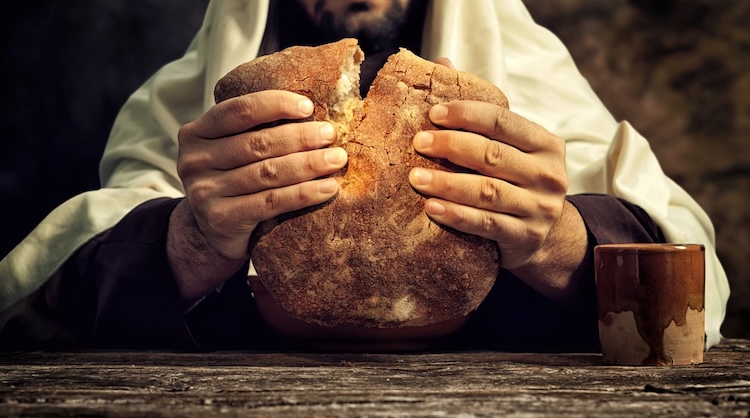
Jesus’s I AM Statements: The Divine Name Made Flesh
Then Jesus comes.
He doesn’t simply reflect God’s light, he claims God’s name.
In moment after moment, he says, “I AM,” echoing Exodus 3:14 with clarity and authority no one ever dared.
More than metaphor, with each statement Jesus tells us about his identity:
- “I am the bread of life” (John 6:35) – He satisfies your soul.
- “I am the light of the world” (John 8:12) – He dispels your darkness.
- “I am the gate” (John 10:9) – He welcomes you into safety and belonging.
- “I am the good shepherd” (John 10:11) – He knows you, leads you, and lays down His life for you.
- “I am the resurrection and the life” (John 11:25) – He conquers death itself.
- “I am the way and the truth and the life” (John 14:6) – He is the only way home.
- “I am the true vine” (John 15:1) – He is your constant source of growth, strength, and fruitfulness.
The Eternal I AM in the New Testament
The “I AM” doesn’t stop with Exodus or the Gospels. From Acts to Revelation, Jesus bears the same divine identity, through worship, prayer, and divine glory—honors reserved for God alone (Revelation 5:12–14).
Who Is I AM? The God Who Is With Us
God could have given Moses a title. He could’ve said, “I’m the Creator,” or “the Ruler of Heaven.” But instead, he gave him a name: “I AM WHO I AM” (Exodus 3:14).
Throughout Scripture, he unfolds that name, revealing more of his nature and heart:
- “I am the LORD” (Exodus 6:2) – Not a power in the sky. He’s faithful. Covenant-keeping. A God who doesn’t forget his promises.
- “I am the LORD your God” (Exodus 20:2) – Not distant. Not abstract. Your God. Close. Personal. Relational.
- “I am holy” (Leviticus 11:44) – Set apart. Reveals his moral purity and establishes the standard for his people’s conduct.
- “I am compassionate” (Exodus 22:27) – Gentle and kind. He sees the weary. He hears the cries. And he responds with compassion.
- “I am with you” (Isaiah 41:10) – Not just occasionally. Always. In the valley, on the mountain, and in every ordinary moment between.
- “I am your shield” (Genesis 15:1) – Your protector. Your covering. The safe place where fears lose their grip.
- “I am God Almighty” (Genesis 17:1) – Strong enough to carry what you can’t. Powerful enough to do what you can’t imagine.
- “I the LORD do not change” (Malachi 3:6) – When the world wobbles, he doesn’t. When hearts shift, he stays the same. He’s faithful to his promises.
- “I am the LORD, who heals you” (Exodus 15:26) – He binds wounds, restores what’s broken, and speaks life into what was dead—body and soul.
- “I am the LORD, who makes you holy” (Leviticus 20:8) – He doesn’t just save us, he transforms us. Burns away what holds us back and refines us for something better.
- “Be still, and know that I am God” (Psalm 46:10) – Not frantic. Not forceful. Just still. Sovereign. Steady. Power we can trust. A presence where we can rest.
These are the I AM attributes. Completely trustworthy, present, and powerful.
The One who always is. And always will be.

The Significance of God the I Am For Us Today
So what does all of this mean for us, right here, right now? It means we are never alone.
The same God who met Moses in a burning bush is with us in our cubicles. In our hospital rooms. In the waiting season.
Fully present, all-powerful, always faithful.
In a world that constantly changes, God remains the same. He is our anchor in chaos. Our peace in the storm. Our strength when we have none left.
We don’t need to be enough because he is.
Jesus, the great “I AM,” stepped into history to walk with us daily. To forgive our sins. To offer us life. To say with compassion and conviction: “Take heart. I AM.”
So we can take off our sandals.
Let go of whatever makes us feel self-sufficient . . . or not enough.
The ground we stand on is holy, not because of where we are, but because of Who is with us. The I AM WHO I AM is here. And he changes everything.
Want to go deeper?
Explore our resource library for articles and reflections to help you know the I AM personally—and draw near to him daily.