Adam & Eve > Human Tools and Technology

Human Tools and Technology

From early stone tools to AI and space travel, human ingenuity has shaped history. But where does this drive to innovate come from? Unlike animals, we don’t just adapt to our environment—we create, we build, and we improve. Our ability to make tools, use energy, and advance technology hints at more than survival. It reflects the image of our Creator.

But with great innovation comes great responsibility. How do we use technology wisely? What happens when we misuse advancements? Let’s explore how science reveals our God-given gift of creativity and our drive for progress—along with the ethical challenges technology brings.
Human Tools and Technology

Easy Reading

Looking for a starting point? These articles tackle today's biggest science and faith questions in a clear, accessible way—no PhD required. 

A Model for AI-Human Collaboration
Human Tools and Technology

A Model for AI-Human Collaboration

Explore the strengths and limitations of AI, highlighting the synergy of human-AI collaboration and its implications for consciousness and creativity. Read More

Read More
AI Promises to Help Make Lifesaving Drugs, but This Superpower Has a Dark Side
Human Tools and Technology

AI Promises to Help Make Lifesaving Drugs, but This Superpower Has a Dark Side

Explore AI's dual role in drug discovery—accelerating lifesaving medicines and posing risks for misuse—and the ethical steps to safeguard this powerful technology. Read More

Read More
Saving Lives and Exploring Frontiers with Bioinspired Tiny Flying Robots
Human Tools and Technology

Saving Lives and Exploring Frontiers with Bioinspired Tiny Flying Robots

Explore how bioinspired tiny flying robots mimic insect flight, overcoming tech challenges for applications like space exploration. Read More

Read More

Looking For More?

Search our archives for more easy-to-read blog posts.

Find More

Deep Dives

Ready for more complex topics and advanced scientific commentary? Dig deeper with our scholar articles.
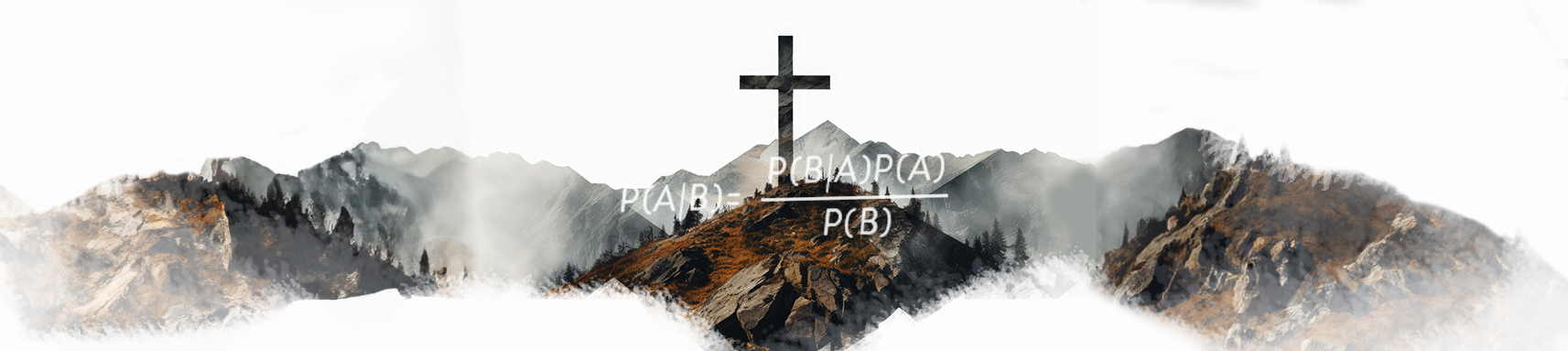
Bayes, Babbage, and Belief in the Resurrection

Bayesian statistics, first conceived by the Reverend Thomas Bayes in the 1740s, is at least partly responsible for several significant historical achievements. Bayesian statistics helped Alan Turing crack the Enigma cipher used by the Germans in World War II, aided researchers at Harvard in identifying the authors of the… Read More

Read More

Most Polluted City Sets Course for Creation Care and Health

According to recent satellite data, India, now the world’s most populous nation, ranks highest (as in worst) for particulate air pollution. Not surprisingly, Delhi, India’s capital city, with a metropolitan population of over 29,000,000, ranks as the world’s most air-polluted city.1 Such pollution is more than merely unpleasant for… Read More

Read More


Why Leap Years Are Important

Explore how leap years align our calendar with Earth's solar orbit, reflecting precise cosmic order and supporting biblical creation. Read More

Read More
Aliens, AI, and God: The Search for Superintelligence

Explore the quest for superintelligence—aliens, AI, and God—and how it challenges our understanding of intelligence and divine wisdom. Read More

Read More
Technology Tempts: Can Applied Science Go Too Far?

Explore how technology, while a blessing, can tempt us toward pride and self-reliance, urging faithfulness to God amid scientific advances. Read More

Read More
Saving Astronomy—and More

Explore how artificial lighting and satellite constellations threaten our ability to observe the night sky and appreciate God's creation. Read More

Read More
LuSEE: Boldly Going Where No One Has Gone Before

Explore LuSEE–Night: a groundbreaking robotic radio telescope on the Moon's far side set to unveil cosmic Dark Ages beyond Earth's interference. Read More

Read More
A Model for AI-Human Collaboration

Explore the strengths and limitations of AI, highlighting the synergy of human-AI collaboration and its implications for consciousness and creativity. Read More

Read More